

August 09, 2026
article by the prompt team

Managing cash effectively is one of the most important things you can do as a small business owner in Ghana. When the goal is to build sustainable wealth and keep your business resilient through difficult periods, cutting costs and saving money consistently are not optional habits — they are foundational disciplines.
As the legendary investor Charlie Munger once observed, reaching your first significant financial milestone requires brutal consistency and stubborn saving. The same principle applies to building a healthy cash reserve in your business. It is rarely glamorous. It requires discipline in the months when money feels tight and restraint in the months when it feels plentiful. But the businesses that build genuine financial resilience are almost always the ones that take saving seriously — long before they need it.
This guide unpacks why saving matters for your Ghanaian small business, how much you should aim to set aside, and the practical strategies — both obvious and less obvious — that can help you get there.
Here’s what we’ll cover:
- Good reasons to save money in your business
- How much should you save?
- The broader benefits of building cash reserves
- Practical tips for saving money in your business
- Building liquidity for whatever comes next
- Final thoughts
Good reasons to save money in your business
It prepares you for the unexpected.
From a piece of equipment breaking down at the worst possible moment to a sudden drop in customer demand, unexpected events are not a question of if — they are a question of when. Having a financial safety net means your business can absorb those shocks without being forced into expensive short-term borrowing or making desperate decisions under pressure.
Ghana’s economic environment has reminded business owners of this repeatedly. The cedi volatility of recent years, rising fuel and utility costs, and the disruption caused by the COVID-19 pandemic all created serious cash flow challenges for businesses that had no reserves to fall back on. Those with savings navigated those periods with significantly more control.
It lets your money work for you.
When your cash is sitting in an interest-bearing business savings account rather than in a current account, it earns interest — and that interest compounds over time. In Ghana, several commercial banks and savings institutions offer business savings products with reasonable interest rates. The Ghana Association of Savings and Loans Companies represents many of the deposit-taking institutions that serve SMEs across the country, and their members offer savings products worth exploring.
Higher interest rates are painful when you have debt — but they are your friend when you have savings. The more consistently you save, the more your money multiplies on its own.
It makes your business goals achievable.
Wanting to open a second location in Tema. Launching a new product line. Expanding from Accra into Kumasi or Takoradi. Hiring your first dedicated salesperson. All of these goals have one thing in common: they cost money. A clear business plan that outlines what you want to achieve — and how much it will cost to get there — gives you a concrete savings target to work toward, month by month.
Without a savings plan, these goals remain aspirations. With one, they become scheduled outcomes.
It keeps you operational during slow periods.
Many Ghanaian businesses are seasonal or cyclical. A sachet water seller, a catering business, a tourism-related enterprise — all of these experience peaks and troughs that are largely predictable but still financially challenging. Saving during the strong periods funds operations during the slow ones — reducing the pressure to make reactive decisions, take on debt, or reduce your team at exactly the moment when you need them most.
How much should you save?
The honest answer is: it depends on your specific situation.
As a general starting point, most financial advisors recommend that businesses aim to keep enough in reserve to cover three to six months of operating expenses — including rent, salaries, utilities, insurance, and any regular supplier payments. Others suggest setting aside approximately 10% of monthly profits as a consistent savings discipline, regardless of what else is happening in the business.
The right amount for your business will depend on several factors.
The stage of your business. Early-stage businesses typically face higher expenses and greater uncertainty — which means the need for a buffer is greater, even though building one is harder. More established businesses with predictable revenue and lower uncertainty can often save more aggressively.
Your business goals. If you are planning to open a second location, invest in new equipment, or launch a new product in the next two to three years, your savings target needs to reflect those specific costs — not just your operational buffer.
Your industry and business model. A product-based business with significant inventory and logistics costs will have different cash flow dynamics than a service business or a software subscription company. Understanding your specific cost structure is the starting point for determining a realistic savings target.
Your monthly cash flow needs. How much cash does your business need to cover its essential monthly expenses? If you are not certain, a cash flow forecasting exercise is a valuable investment of time.
The broader benefits of building cash reserves
Beyond the security of having money available when you need it, building a healthy cash reserve delivers several other meaningful advantages for your Ghanaian small business.
Greater strategic agility. When you have cash available, you can move quickly on opportunities — a piece of equipment available at a discount, a competitor’s client who is looking for a new supplier, a market gap that a fast-moving competitor is about to fill. Cash-flow-positive businesses can say yes to things that cash-flow-negative businesses cannot even consider.
A better credit rating. The less you need to borrow for unexpected expenses, the less likely you are to fall behind on payments — and the stronger your credit profile becomes over time. When you do need to borrow for a strategic purpose, a strong credit history gives you access to better terms and lower rates.
A more attractive business to investors and lenders. When investors or financial institutions evaluate your business — whether for equity investment, a bank loan, or a grant from an organisation like the Ghana Venture Capital Trust Fund — historical cash flow and reserves are among the first things they look at. A business with demonstrable financial discipline is significantly more fundable than one that is perpetually operating close to the edge.
The capacity to give back. When your business is using every available resource just to stay operational, there is nothing left for anything else. As your savings grow and your financial position strengthens, you create the capacity to invest in your community — whether that means sponsoring a local school, supporting a community initiative, or simply hiring from within your neighbourhood. In Ghana’s business environment, where community relationships are deeply valued, this kind of engagement builds genuine goodwill that pays back commercially over time.
Practical tips for saving money in your business
The obvious ones first:
Cut costs wherever you can without compromising quality or customer experience. Review your expenses regularly . Negotiate with your suppliers. Ask for a discount in exchange for early or upfront payment. Many suppliers — particularly in Ghana’s informal and semi-formal business sectors — are willing to negotiate on price when payment is reliable and prompt.
Set clear financial goals and stick to a budget. A savings target without a budget to support it is just a wish. Know what you plan to spend, track it consistently, and save what remains.
Get multiple quotes for significant purchases. At least three quotes for any major expenditure is a discipline that consistently finds better value.
The less obvious ones:
Share costs with other businesses. If you have more office space than you currently need, subletting part of it to another business covers a portion of your rent without any additional effort. Cost-sharing arrangements — splitting the cost of a shared marketing campaign, a shared delivery vehicle, or a shared administrative resource — are underused by Ghanaian SMEs and can produce meaningful savings.
Use freelancers strategically. The rise of Ghana’s freelance economy means you can now access high-quality marketing, accounting, design, copywriting, and financial management expertise without the full cost of a permanent hire. You pay only for what you need, when you need it — eliminating the overhead of a full-time salary, benefits, and office space.
Learn skills that you currently outsource. Paying a consultant to teach you how to run your own social media advertising, manage your own bookkeeping, or handle a basic HR process is an investment that saves money repeatedly in the future. Every skill you bring in-house reduces your dependence on external service providers for routine tasks.
Barter. This is one of the oldest and most underused business strategies available. If you have a capability that another business needs, and they have something you need in return, a barter arrangement creates real value for both parties at zero cash cost. An accountant and a digital marketing agency, for example, can exchange services to mutual benefit.
Build a savings buffer through your budgeting process. One practical trick: deliberately overestimate your monthly expenses in your budget, and save whatever is left over at the end of the month. The psychological effect of treating savings as a residual — something you save after expenses rather than alongside them — is well documented, and this simple technique makes consistent saving more achievable.
Focus on retaining your existing customers rather than constantly chasing new ones. Research consistently shows that acquiring a new customer costs anywhere from five to twenty-five times more than retaining an existing one. A 5% improvement in customer retention can increase profits by between 25% and 95%. For Ghanaian small businesses where every cedi of marketing budget matters, doubling down on serving your existing customers exceptionally well is one of the highest-return investments available.
Share your expertise generously. Publishing useful content on LinkedIn, speaking at industry events, contributing articles to local business publications — these activities build your reputation, generate referrals, and reduce your dependence on paid marketing over time. In Ghana’s business community, where trust and personal reputation carry significant commercial weight, being known as a generous and knowledgeable contributor in your field pays back in ways that are difficult to quantify but very real.
Move your business operations to the cloud. On-premise software is expensive to maintain, difficult to access remotely, and puts your data at risk. Switching to cloud-based business management tools reduces your technology overhead, improves data security, and gives you real-time visibility into your finances from any device.
Speak to an accountant about your tax position. Many Ghanaian small business owners are paying more tax than they need to simply because they are not aware of the deductions, exemptions, and incentives available to them under Ghana’s tax framework. The Ghana Revenue Authority publishes guidance on available tax reliefs — but a qualified accountant familiar with Ghana’s tax environment will help you identify and apply every legitimate opportunity to reduce your tax bill, freeing up more cash to save and reinvest.
Building liquidity for whatever comes next
The value of saving money consistently in your business cannot be overstated. Some of the most significant opportunities and investments only become available after years of disciplined saving — and the businesses that have built that reserve are the ones positioned to seize them.
But beyond opportunity, savings provide something equally valuable: resilience. Ghana’s business environment is dynamic and sometimes unpredictable. Economic volatility, currency movements, political transitions, and global disruptions all create periods of difficulty that no business can fully anticipate. Having cash on hand takes the pressure off during those periods — allowing you to respond thoughtfully rather than desperately, and to recover faster when conditions improve.
As Charlie Munger said, building wealth requires brutal consistency. The same is true of building a financially resilient business. Save consistently. Track your finances accurately. Spend deliberately. And build the reserves that give your business the freedom and flexibility to grow on your own terms.
Final thoughts
Building a savings discipline into your Ghanaian small business is one of the highest-return decisions you can make — not because it produces immediate results, but because the cumulative effect over time is transformative. A business with cash reserves is more resilient, more agile, more fundable, and more capable of seizing the opportunities that its less-prepared competitors cannot reach.
Start where you are. Even a modest, consistent monthly saving builds meaningful reserves over time. Track your income and expenses accurately so you always know where you stand. Cut the costs that are not earning their place. Retain your customers with exceptional service. And move your operations to tools that reduce overhead while improving visibility.
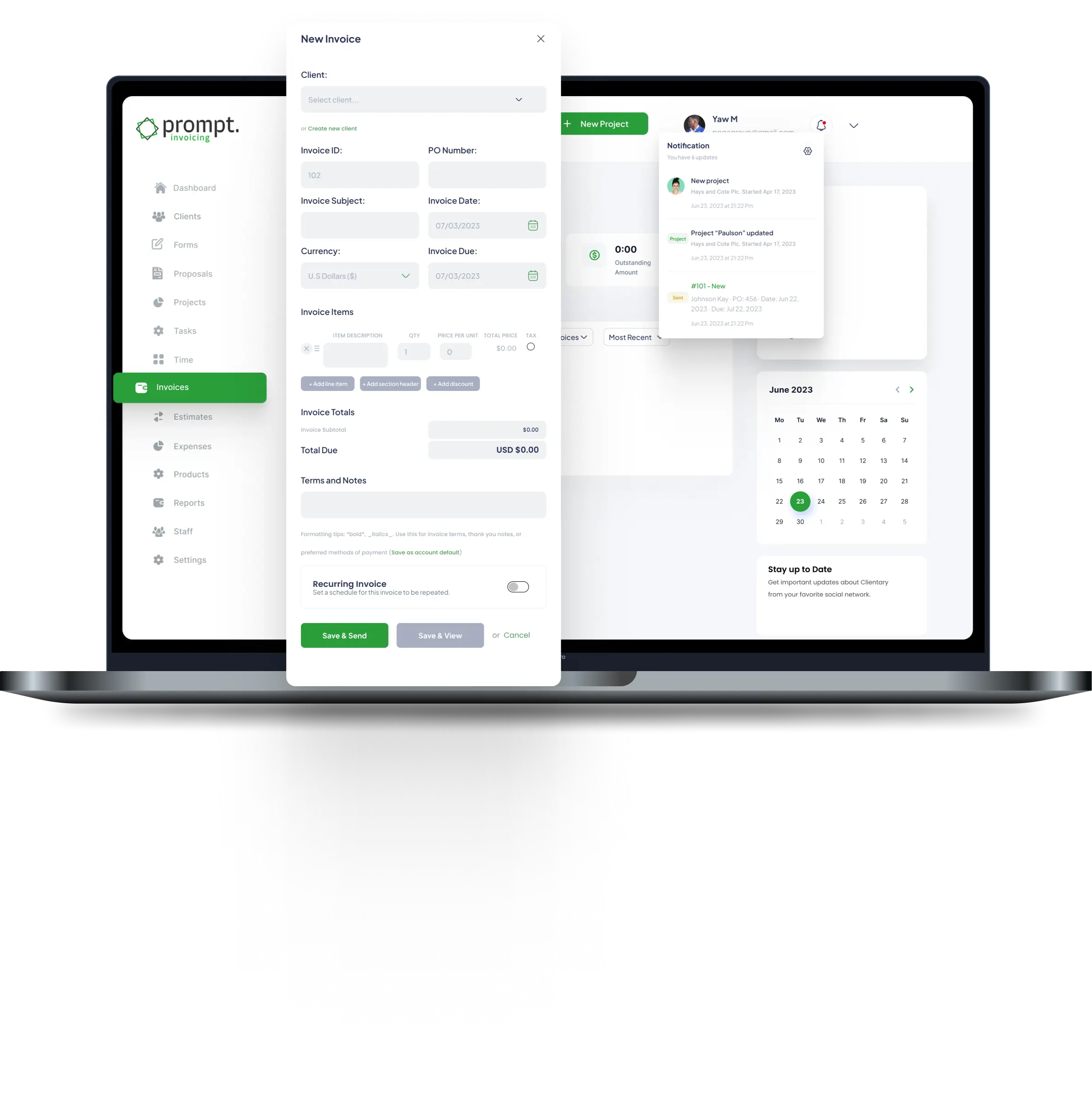
Prompt Integrated is built to support exactly that kind of financially disciplined, efficiently run Ghanaian small business — with invoicing, expense tracking, payroll, and project management all in one accessible, cloud-based platform. Get started with Prompt Integrated today.









Leave A Comment