

August 06, 2026
article by the prompt team

As small business owners in Ghana look ahead to the next phase of growth, one question keeps coming up in almost every conversation about performance and sustainability: how do you get more from your team without simply demanding more?
The answer, more often than not, comes back to employee engagement.
It sounds like corporate jargon — the kind of phrase you might hear at a conference and promptly forget. But employee engagement is one of the most practically significant concepts in business management, and it matters just as much for a ten-person operation in Kumasi as it does for a multinational with offices across Africa.
It is also frequently misunderstood. Employee engagement is not the same as employee satisfaction or workplace happiness. Your team members can be perfectly happy — enjoying the office atmosphere, liking their colleagues, not actively looking for another job — without being truly engaged. A satisfied employee comes in, does what is asked of them, and goes home. An engaged employee invests themselves — their energy, their ideas, their genuine commitment — in helping the business, their colleagues, and their customers succeed.
That difference is commercially significant. According to Gallup’s research — which draws on analysis of 35 million employees worldwide — productivity among highly engaged teams is 14% higher than among teams with the lowest engagement levels. Two-thirds of the global workforce is currently not engaged. That is an enormous opportunity for any business willing to take engagement seriously.
For small businesses in Ghana, building a genuinely engaged team is one of the most powerful competitive advantages available — and it does not require a large budget to do it well.
Here’s what we’ll cover:
- Prioritise your employees’ wellbeing
- Offer rewards and incentives that actually mean something
- Give your team a genuine voice
- Equip your people with the right tools
- Employee engagement as a competitive edge
- Final thoughts
1. Prioritise your employees’ wellbeing
Caring is a two-way street. When employees feel that their employer genuinely cares about them — not just as a resource to be deployed, but as a whole person with a life, health, and ambitions beyond the job — they respond with a level of commitment and effort that no performance management system can manufacture.
For small businesses in Ghana, demonstrating that care does not have to mean expensive programmes or elaborate initiatives. Often, it is the smaller, more personal gestures that make the deepest impression.
This might mean giving a team member a day off when they are clearly struggling with something personal. It might mean covering the cost of a relevant online course through a platform like Coursera or Udemy — an investment that signals you believe in their development. It might mean organising a team outing to somewhere like Labadi Beach or Aburi Gardens at the end of a particularly demanding quarter. Or it might simply mean remembering a team member’s birthday and acknowledging it — a small act that communicates something important about how much you notice and value the people around you.
The Ghana Employers Association consistently highlights employee wellbeing as one of the most significant factors in workforce retention and performance across Ghanaian businesses. The research is clear: when people feel cared for, they care more in return.
2. Offer rewards and incentives that actually mean something
If you want your team to go the extra mile — to bring their energy and creativity to problems, to stay late when the business needs them, to treat your customers the way you would treat them yourself — then recognising and rewarding that effort is essential.
In Ghana’s current economic environment, where many small businesses are managing tight margins, financial bonuses are not always possible. But the good news is that meaningful recognition does not have to cost very much. What matters most is that it is genuine, timely, and specific.
Some of the most effective forms of recognition for small Ghanaian businesses include:
A handwritten thank you note paired with a small gift — a box of chocolates, a gift voucher from a local retailer, or a bag of fresh produce from Makola Market. Public recognition in a team meeting or on your business WhatsApp group — acknowledging specifically what someone did and why it mattered. An extra day of annual leave as a reward for exceptional effort on a specific project. The opportunity to work on a high-profile or particularly interesting client brief that the employee would not otherwise have been given. A small cash bonus — even a modest GHS 100 or GHS 200 on a mobile money transfer — as an immediate, tangible recognition of outstanding work.
The key is consistency and sincerity. Recognition that is given fairly and specifically — rather than as a random or occasional gesture — builds a culture where people feel that effort is noticed and valued.
3. Give your team a genuine voice
Employees feel more engaged when they feel genuinely heard — when their ideas, concerns, and suggestions are taken seriously rather than politely acknowledged and then ignored.
This does not mean consulting your team on every business decision. It means creating consistent, authentic opportunities for your people to contribute their perspectives — and then demonstrating, where possible, that those perspectives have influenced how things are done.
In practice, this might mean building a brief feedback segment into your regular team meetings. It might mean scheduling individual one-on-one conversations with team members to understand what is working for them and what is not. It might mean a simple, anonymous monthly survey — a few honest questions about how people are feeling and what would help them do their jobs better.
It also means being open to criticism. Employees who raise concerns and see nothing change quickly learn that their voice does not actually matter — and that lesson, once learned, is very hard to undo. When feedback leads to real change, even small change, it sends a powerful signal that people’s voices have genuine weight in the business.
The African Management Initiative — a pan-African learning platform supporting workplace leadership across the continent — identifies inclusive leadership and employee voice as among the most impactful drivers of team performance in African business contexts. The evidence is consistent: teams that feel heard perform better.
4. Equip your people with the right tools
One of the most direct and immediate ways to improve employee engagement is to remove the friction from their daily work. When people spend a significant portion of their day fighting with slow, outdated, or confusing tools and processes — manually updating spreadsheets, searching for information that should be instantly accessible, re-entering data that should only need to exist in one place — they become frustrated, disengaged, and less productive.
The right technology does the opposite. It makes the meaningful parts of the job more accessible and the repetitive administrative parts faster and less draining. When your team can focus their energy on work that actually requires their judgement, creativity, and expertise — rather than on processes that a good system would handle automatically — engagement and performance both improve.
Today’s cloud-based business tools are more accessible, more affordable, and more intuitive than they have ever been. And for small businesses in Ghana that cannot afford a separate system for every business function, platforms that bring multiple capabilities together in one place offer particular value.
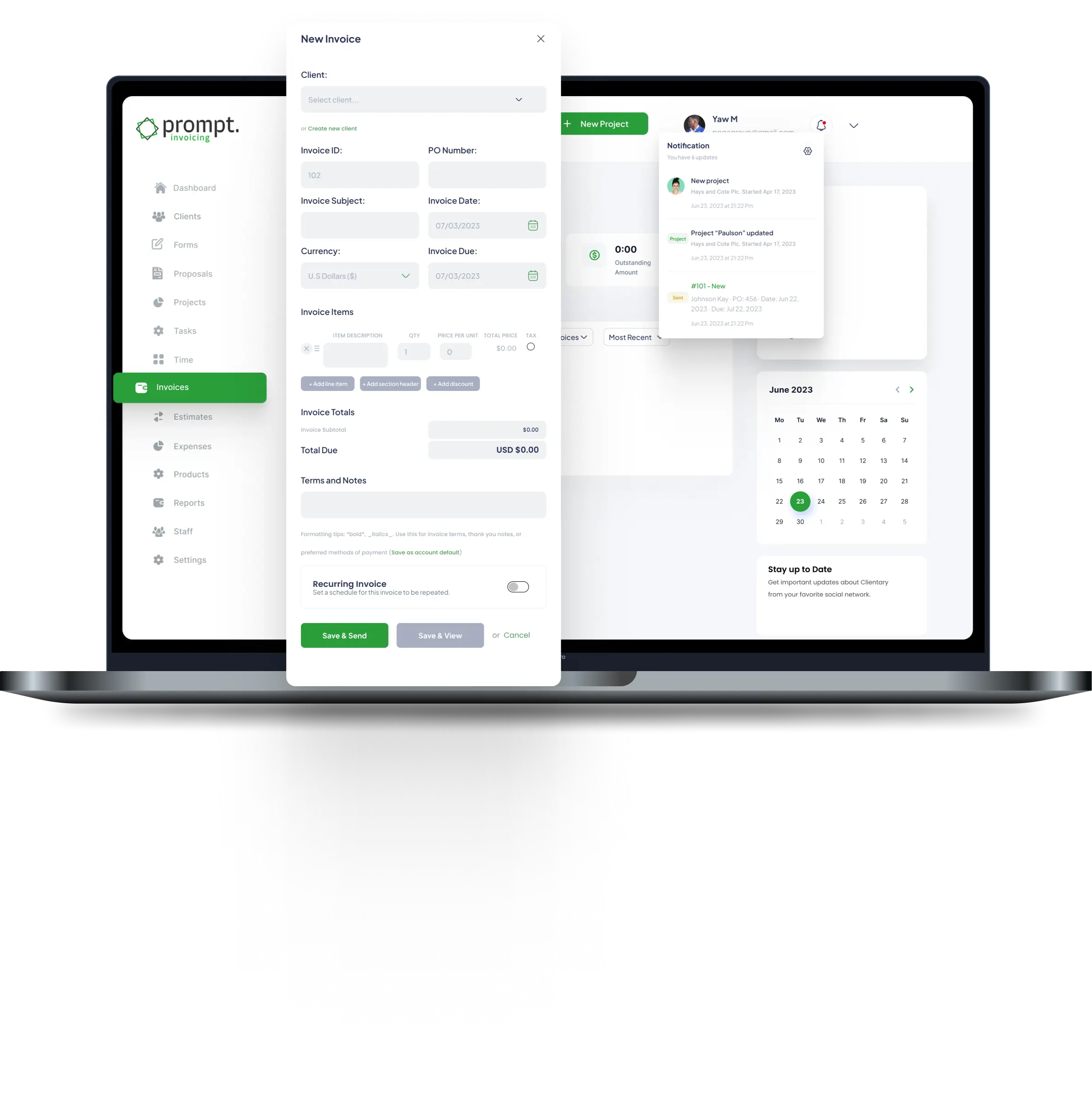
Prompt Integrated is built for exactly this — giving Ghanaian small business teams a single, cloud-based platform where invoicing, expense tracking, payroll, and project management all work together seamlessly. Less time on administrative friction means more time on the work that grows the business — and more engaged, more productive people doing it.
Employee engagement as a competitive edge
For small businesses in Ghana competing for talent, clients, and market share, employee engagement is not a soft priority that can wait until things are more settled. It is a genuine competitive advantage — one that is available right now, does not require a large investment to develop, and compounds in value over time.
Engaged employees deliver better customer service. They solve problems more creatively. They refer talented friends to open positions. They stay longer, reducing the cost and disruption of turnover. And they advocate for your business in ways that no marketing budget can replicate.
Gallup’s research puts the productivity advantage of highly engaged teams at 14% over the least engaged teams. In a market as competitive as Ghana’s, that difference is the kind of edge that separates businesses that grow from those that stagnate.
The four areas covered in this article — wellbeing, recognition, voice, and tools — are not complicated. They do not require a dedicated HR team or a significant budget. They require genuine intention, consistent follow-through, and the willingness to treat your people as the most important asset in your business — because they are.
Final thoughts
Building a more engaged, more productive team in your Ghanaian small business starts with a simple decision: to take your people as seriously as you take your products, your clients, and your finances.
When your team feels cared for, recognised, heard, and well-equipped, the results show up everywhere — in the quality of their work, in the way they treat customers, in the energy they bring to difficult problems, and in how long they choose to stay.
None of the steps in this article require a large budget or a dedicated HR department. They require genuine attention to the people who show up every day to make your business work.
Prompt Integrated supports Ghanaian small businesses in building the kind of organised, professional, and people-centred operations that make genuine engagement possible — with payroll, invoicing, expense tracking, and project management all in one platform, so your team spends less time on admin and more time on the work that matters. Get started with Prompt Integrated today.










Leave A Comment