

September 07, 2026
article by the prompt team

Is your business struggling to meet its financial obligations? Are salaries, supplier payments, or tax deadlines feeling uncomfortably close while your bank balance tells a different story?
You are not alone — and the situation, while serious, is manageable if you act quickly and deliberately.
This guide walks you through a structured 30-day plan to stabilise your cash flow, negotiate with creditors, and build the financial foundation your business needs to survive the immediate crisis and emerge more resilient on the other side.
Here’s what we’ll cover:
- What a cash flow crisis actually is
- The reality behind cash flow problems for Ghanaian businesses
- Phase 1: Immediate stabilisation — days 1 to 7
- Phase 2: Communication and negotiation — days 8 to 14
- Phase 3: Long-term planning — days 15 to 30
- When to seek external help
- How to prevent future crises
- Final thoughts
What a cash flow crisis actually is
A cash flow crisis occurs when a business does not have enough liquid funds available to pay its bills, salaries, or taxes on time. It is one of the most common — and most dangerous — financial situations a small business can face.
Crucially, a cash flow crisis is not the same as being unprofitable. A business can be generating good revenue on paper and still find itself unable to meet its obligations if clients are paying late, costs are running ahead of collections, or reserves have run dry. In fact, this is one of the most common patterns seen in growing Ghanaian businesses — revenue is rising, but the timing mismatch between money going out and money coming in creates a gap that becomes increasingly difficult to manage.
In Ghana’s business environment, where late payments from clients are common, fixed costs can be substantial, and access to emergency credit is limited, a cash flow crisis can escalate quickly if it is not addressed with urgency and structure.
The reality behind cash flow problems for Ghanaian businesses
Poor liquidity is one of the leading causes of small business failure across Ghana and across Africa more broadly. The Association of Ghana Industries has consistently highlighted cash flow management as one of the most significant operational challenges facing Ghanaian SMEs — and the patterns are familiar.
The most common contributing factors include:
Late payments from customers. In Ghana’s business culture, where payment terms are often informal and follow-up can feel uncomfortable, outstanding invoices can sit unpaid for weeks or months beyond the agreed date.
High fixed costs relative to revenue. Rent, salaries, utility bills, and loan repayments do not pause when revenue slows. When income is inconsistent, fixed obligations can quickly become unmanageable.
Insufficient cash reserves. Many small Ghanaian businesses operate without a meaningful financial buffer — which means any disruption to income, any unexpected cost, or any payment delay can immediately create a crisis.
Manual, disorganised financial processes. When your financial records are scattered across WhatsApp messages, notebooks, and memory, you cannot get an accurate picture of your position quickly enough to respond to problems before they escalate.
The good news is that all of these challenges are addressable — particularly when you act early and follow a structured approach.
Phase 1: Immediate stabilisation — days 1 to 7
The first priority in a cash flow crisis is to stop the situation from getting worse. That means taking immediate control of your outgoings and establishing a clear picture of where you stand.
Freeze all non-critical spending. Go through every current expense and categorise it ruthlessly. Identify what must be paid to keep the business operational — and what can be paused, reduced, or eliminated without immediately damaging your operations or your customer relationships.
Your must-pay list should include:
- Salaries and any outstanding leave pay
- PAYE tax and SSNIT contributions owed to the Ghana Revenue Authority and SSNIT
- Rent and critical infrastructure costs
- Payments to key suppliers whose continued supply is essential to your business operations
Everything else should be reviewed. Unused software subscriptions, non-essential services, deferred maintenance — these are the first places to find immediate savings.
Establish daily financial visibility. During a cash flow crisis, you cannot afford to check your finances weekly or even every few days. Establish a simple daily routine: check your bank balance, review what payments are due in the next three weeks, and identify which outstanding invoices are most likely to be paid and when.
Phase 2: Communication and negotiation — days 8 to 14
Once you have stabilised the immediate situation and established clear visibility into your finances, the next phase focuses on two things: accelerating money coming in and negotiating more breathing room on money going out.
Accelerate collections from customers.
Contact every customer with an outstanding invoice and make collecting those payments your top priority. Be direct but professional — most customers will respond positively to a clear, calm request for payment, particularly if you offer to make it easy for them.
Specific tactics that work well in Ghana’s market include:
Offering immediate payment via MTN MoMo or bank transfer to remove any friction from the payment process. Proposing partial deliveries with partial invoicing on work in progress — so you are collecting revenue as you deliver rather than waiting until the end. Requesting a deposit or advance payment on any new work or new agreements. Shortening payment terms on all new invoices from this point forward.
Negotiate proactively with creditors and suppliers.
If you can see that you will struggle to meet a payment obligation, do not wait until the deadline passes. Contact the supplier or creditor early, explain your situation clearly, and come to the conversation with a specific proposal — a payment plan with fixed dates, or a request for a short extension with a clear commitment on when payment will be made.
Creditors who are approached honestly and proactively — with a genuine plan rather than vague assurances — are almost always more cooperative than those who are surprised by a missed payment. Transparency builds trust, even in difficult situations. Silence and avoidance do the opposite.
Phase 3: Long-term planning — days 15 to 30
With the immediate crisis stabilised and negotiations underway, the third phase focuses on building the financial visibility and planning framework that will prevent you from finding yourself here again.
Create a cash flow forecast.
A cash flow forecast is a week-by-week projection of your expected income and outgoings over the next three months. It shows you not just where you are today but where you are headed — and that forward visibility is what allows you to identify problems early enough to address them before they become crises.
Your forecast should include:
- Expected payments from customers, week by week
- Required outgoing payments, week by week
- Your accumulated cash position as a running total
- The specific actions you will take if you identify a projected deficit
Update the forecast weekly using your actual figures — not estimates. The discipline of doing this consistently is what turns cash flow management from a reactive scramble into a proactive discipline.
When to seek external help
If three weeks of structured effort — following the phases above — are not producing sufficient improvement, it may be time to bring in external expertise.
This might include a qualified accountant or financial advisor with experience in SME turnaround situations in Ghana. The Institute of Chartered Accountants Ghana maintains a directory of qualified practitioners who can provide professional guidance on debt negotiation, restructuring, and financial recovery.
In more serious situations, it may be necessary to consider more extensive restructuring of your business model — renegotiating major contracts, reducing your team, or pivoting elements of the business to improve cash generation.
In Ghana, it is also worth engaging with the National Labour Commission if your difficulties are creating employment-related complications, and with relevant creditors about formal repayment arrangements where needed.
Seeking help early is always better than waiting until the situation becomes unmanageable. A professional advisor who sees the problem at week three is in a significantly better position to help than one who is brought in at week twelve.
How to prevent future crises
Once the acute situation has been resolved, the work shifts to making sure it does not happen again. Several disciplines are particularly important:
Build and maintain a financial buffer. Aim to keep three to six months of operating expenses in reserve. This will not happen overnight — but making a consistent monthly contribution to that reserve, even a modest one, builds meaningful protection over time.
Diversify your customer base. Dependence on a small number of large clients creates fragility. If one of those clients pays late or reduces their business with you, the impact is disproportionate. Building a broader base of customers reduces that exposure.
Negotiate shorter payment terms as a standard practice. Every new contract you sign is an opportunity to build better cash flow terms into the agreement. Make shorter payment windows your default — and make it easy for clients to pay quickly by offering MoMo and digital payment options on every invoice.
Automate your financial management. Manual processes are slow, error-prone, and give you a delayed picture of your financial position. Cloud-based tools that keep your invoicing, expenses, and payroll data current in real time give you the early warning system that prevents small cash flow problems from becoming crises.
Final thoughts
A cash flow crisis is one of the most stressful experiences a small business owner can face. But it is also one of the most recoverable — if you act quickly, communicate honestly, and follow a structured plan.
The 30-day framework in this guide — stabilise immediately, communicate proactively, and build long-term visibility — gives you a practical path through the immediate difficulty and toward a more resilient financial position on the other side.
The goal is not just to survive the crisis. It is to emerge from it with better habits, better systems, and a clearer understanding of your business’s financial position than you had before.
Important: This article provides general guidance and is not a substitute for individual advice from qualified professionals. In cases of serious financial difficulty, it is strongly recommended to consult a qualified accountant, financial advisor, or legal professional.
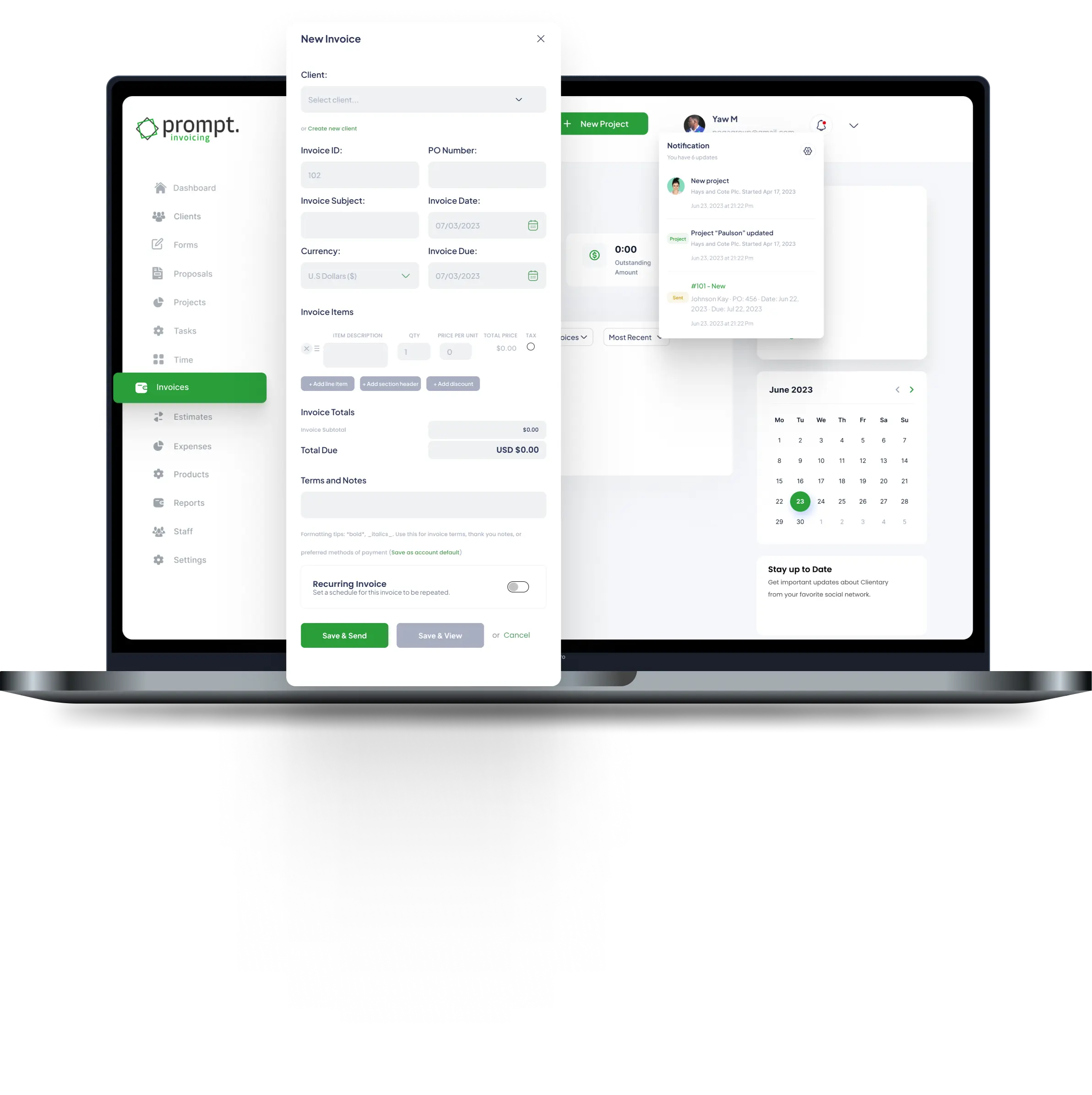
Prompt Integrated is built to give Ghanaian small businesses the financial clarity and operational organisation that prevents cash flow crises from developing in the first place — with invoicing, expense management, payroll, and project management all in one affordable, cloud-based platform. Get started with Prompt Integrated today.









Leave A Comment