

June 16, 2026
article by the prompt team

Does payroll make you want to pull your hair out every month?
If so, you are far from alone. Payroll is consistently one of the biggest headaches for small business owners in Ghana — and for good reason. It is not just about transferring money. It is about getting it right, every single time.
Your employees expect to be paid accurately and on time. No excuses, no delays. And once you start factoring in bonuses, overtime, leave pay, and statutory deductions, what looks like a simple monthly task quickly becomes something far more complicated.
But here is the upside: get payroll right, and you create a team that trusts you, feels secure, and can focus fully on helping your business grow rather than worrying about whether their salary will land on time.
This article walks through what payroll actually involves, the additional payments you need to be aware of, and eight practical tips to make the whole process easier to manage.
Here’s what we’ll cover:
- What needs to happen before payday
- Other payments you may need to factor in
- 8 ways to simplify payroll for your business
- Final thoughts
What needs to happen before payday
Before payday arrives each month, there are a few essential tasks that need to happen without fail:
- Record each employee’s pay accurately, including their salary, wages, and any additional earnings
- Calculate and apply the correct statutory deductions — including SSNIT contributions, PAYE income tax, and any other required withholdings
- Generate and distribute payslips that clearly itemise every deduction so employees understand exactly what they are being paid and why
Getting these basics right consistently is the foundation that everything else in your payroll process builds on.
Other payments you may need to factor in
Beyond the standard monthly salary, there are several other types of payments that often need to be factored into your payroll. Being aware of these in advance helps you avoid last-minute scrambling:
- Bonuses
- Commission
- Annual leave pay
- Travel and subsistence allowances for employees on business trips
- Maternity leave payments
- Guaranteed payments for non-working days that are not classified as holidays
- Sick leave payments
If your business offers any of these, make sure they are properly documented and factored into your payroll calculations each cycle — not handled as an afterthought.
8 ways to simplify payroll for your business
Want payroll to stop being the most stressful part of your month? These eight tips will help.
1. Stay ahead of your key deadlines
Knowing exactly what needs to happen and when — well in advance — removes a huge amount of unnecessary stress from running payroll.
Build a reliable system that flags important dates ahead of time: monthly payday, SSNIT contribution deadlines, PAYE filing dates with the Ghana Revenue Authority, and annual payroll reporting requirements. Working ahead gives you breathing room to sort out problems before they become urgent.
2. Put the right payroll software in place
Manual payroll calculations are slow, repetitive, and far more prone to error than most business owners realise — especially as your team grows.
Payroll software automates the heavy lifting: calculating statutory deductions, generating payslips automatically, keeping pace with changes in tax regulations, and producing the reports you need for compliance and record keeping. Prompt Integrated’s payroll feature is built specifically for this — handling salary calculations, deductions, and payslip generation in one streamlined system designed for Ghanaian businesses.
It also supports both fixed and variable salary configurations, giving small businesses the flexibility to manage straightforward monthly salaries alongside more complex arrangements like commission-based pay, hourly wages, or contractors with irregular hours — all within the same system.
3. Choose software backed by reliable support
If you are using software to manage payroll and something goes wrong on payday — a technical glitch that delays payments — you need help available immediately, not three days later.
Before committing to any payroll tool, confirm that responsive support is genuinely part of the package, whether that is through chat, email, or phone. Payroll problems do not wait politely for business hours.
4. Get the small details right every time
Setting up employee records correctly from the start — accurate start dates, current addresses, dates of birth, bank details, and SSNIT numbers — might feel like a small administrative task, but it prevents significant headaches down the line.
A single incorrect detail can cause a payment to fail, a deduction to be miscalculated, or a compliance report to be inaccurate. Take the time to get it right the first time.
5. Stay current with payroll rules and regulations
Tax rates, statutory deduction requirements, and labour regulations in Ghana can change, sometimes with limited advance notice. The Ghana Revenue Authority and the Social Security and National Insurance Trust (SSNIT) periodically update rates, thresholds, and compliance requirements that directly affect how you run payroll.
You do not need to become a tax expert. But staying broadly informed, and seeking advice when you are unsure, protects your business from costly compliance mistakes.
6. Learn your payroll software properly
If you have invested in payroll software, take the time to actually learn how to use it well. A short training session or a careful read-through of the platform’s guidance can save you significant time every single month and reduce the likelihood of errors.
Many platforms, including Prompt Integrated, offer guidance and support resources designed to help business owners get the most out of their payroll tools without needing a finance background.
7. Build a cash flow safety net
Staying ahead of your cash flow is essential for any growing business — and it becomes critical when payroll is on the line.
Set up a solid system for following up on outstanding invoices, send your invoices out promptly, and chase late payments firmly the moment they become overdue. If a client pays late and you are short on cash, your ability to pay your own team is put at risk — which is a problem no business owner wants to face.
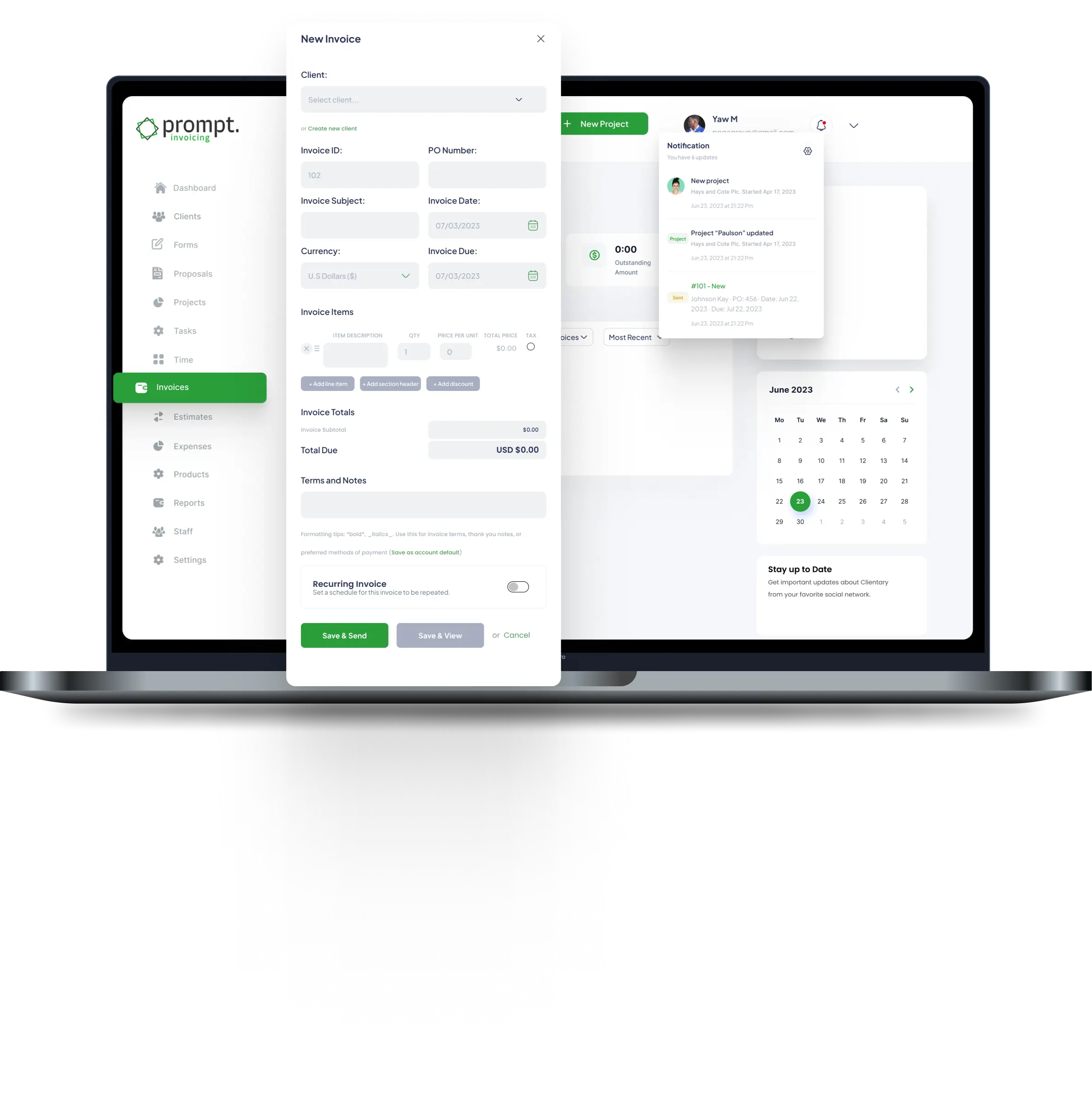
Prompt Integrated’s invoicing feature makes it easier to send professional invoices on time and track outstanding payments, so cash flow disruptions are less likely to catch you off guard. Keeping a small financial cushion set aside for unexpected gaps is also a wise habit worth building.
8. When in doubt, bring in outside help
If managing payroll in-house continues to feel like an uphill battle despite your best efforts, outsourcing to a payroll specialist or accountant is a legitimate and often cost-effective option.
Payroll professionals understand the regulatory landscape, handle the paperwork, and take the administrative burden off your plate entirely — freeing you up to focus on running and growing your business.
Final thoughts
Managing small business payroll in Ghana involves more moving parts than most people expect — deadlines, deductions, compliance requirements, and the simple but non-negotiable need to pay your team accurately and on time.
The good news is that with the right systems in place, payroll does not have to be the stressful, dreaded task it often becomes. Good habits, the right software, and a little forward planning go a long way.
Prompt Integrated brings payroll, invoicing, expense tracking, and project management together in one platform — giving Ghanaian business owners a simpler, more reliable way to manage the financial side of their business, payroll included. Get started with Prompt Integrated today.










Leave A Comment