

June 11, 2026
article by the prompt team
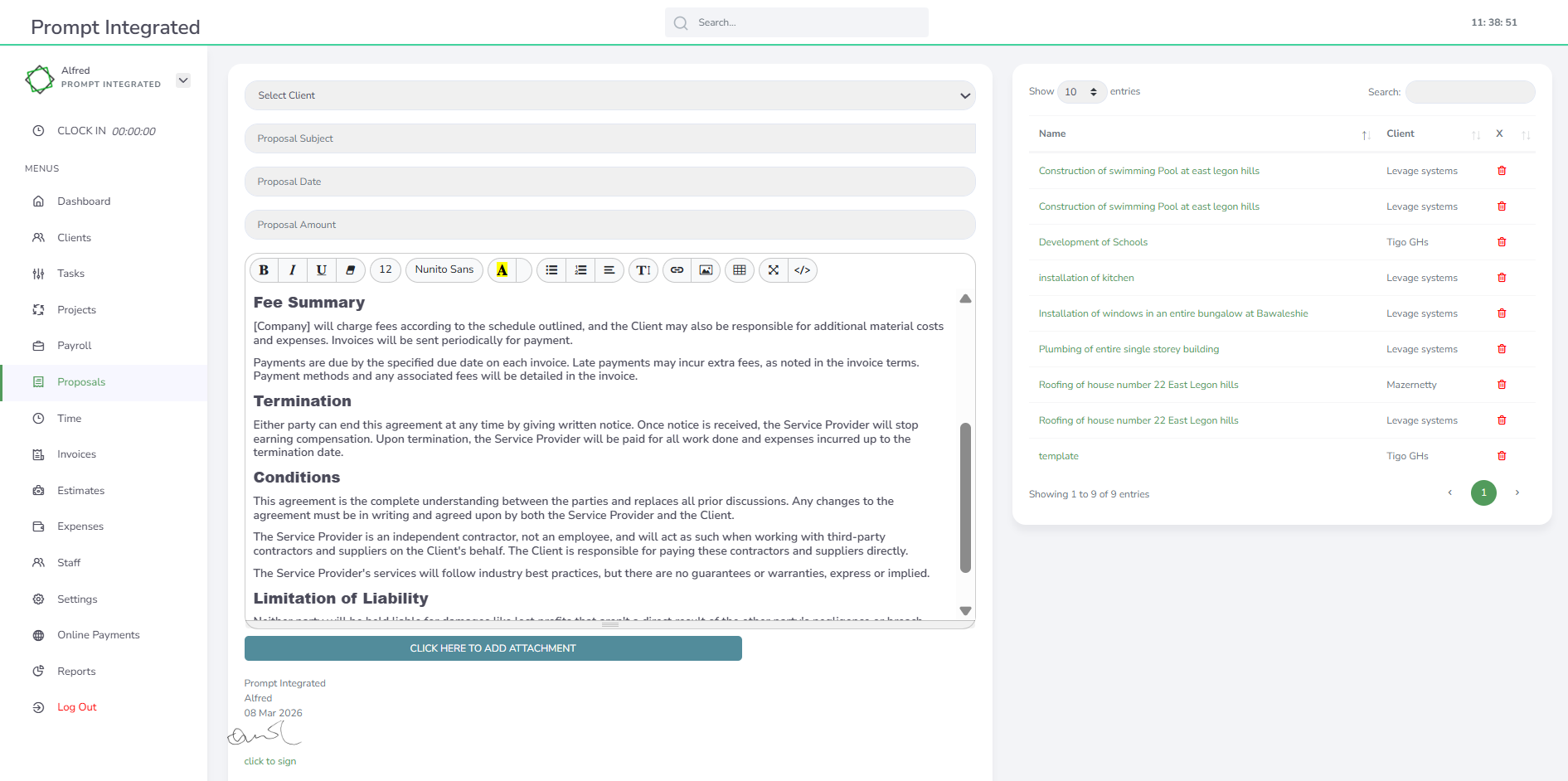
If you have ever lost a deal because a contract took too long to get signed, or spent an afternoon printing, scanning, and emailing documents back and forth, you already understand the problem that digital contracts solve.
For small and growing businesses in Ghana, the way agreements are handled has a direct impact on how quickly work gets started, how soon payments come in, and how professionally the business is perceived by clients, suppliers, and partners. Shifting from paper-based contracts to digital ones with electronic signatures is one of the simplest and most impactful operational upgrades any business can make.
Here is a plain, honest breakdown of what digital contracts and e-signatures actually do for your business — and why more Ghanaian business owners are making the switch.
Here’s what we’ll cover:
- Faster turnaround times
- Sign from anywhere
- Lower administrative costs
- Improved cash flow
- Better document organisation
- Stronger audit trails and accountability
- A better experience for your clients
- Increased security
- Support for remote and growing teams
- Easier compliance and record keeping
- Final thoughts
1. Faster turnaround times
With a paper contract, you print it, sign it, scan it, email it, wait for the other party to do the same, and then hope nothing gets lost along the way. The whole process can take days — sometimes longer if the other party is travelling or simply busy.
Alfred, a business owner in Ghana, experienced this firsthand when he contacted 44 Wood to build a kitchenette for him. “They sent me a contract agreement to sign along with the kitchen design, to make sure everything was agreed upon before work began,” he recalls. “But since they had no software supporting this, I had to manually print it out, sign it by hand, scan it, and send it back to them via WhatsApp. It was a tedious process that could so easily have been avoided with the right software.”
That experience is more common than it should be — and it costs businesses time, money, and the kind of professional impression that clients remember.
With Prompt Integrated, the entire process works differently. Once a contract is drafted, supporting files — like a kitchen design, a project brief, or a scope of work — can be attached directly to the agreement. The contract is then sent by email for the client to review and sign digitally. The moment it is signed, it appears live in the documents manager and is stored automatically in the cloud — no printing, no scanning, no WhatsApp back-and-forth required.
For a business trying to close a deal quickly or get a project started without unnecessary delay, this difference is significant. Contracts that once took days can now be completed in minutes — and both parties have an organised, accessible record of everything that was agreed.
2. Sign from anywhere
One of the most practical advantages of digital contracts is that nobody needs to be in the same room — or even the same city — to make an agreement official.
A client in Tamale can sign a contract with a business in Accra without either party having to travel or arrange a courier. A supplier in Kumasi can confirm terms with a buyer in Takoradi from their phone in the time it takes to read the document. An employee starting a new role can sign their contract before their first day, without the formality of a physical signing session.
In a country where distances are real and logistics are not always straightforward, this flexibility has genuine commercial value.
3. Lower administrative costs
Paper contracts cost more than most business owners stop to calculate. Printing. Paper. Ink. Courier fees for documents that need to travel. Physical storage for filing. The time spent by staff handling, organising, and tracking paper documents.
None of these costs are large on their own. Together, across the course of a year, they represent a meaningful and largely avoidable expense.
Digital contracts eliminate most of this overhead. There is no printing. No courier. No filing cabinet. Documents are created, sent, signed, and stored entirely online — at a fraction of the cost of the traditional alternative.
For Ghanaian SMEs where every cedi of overhead matters, this is a straightforward saving that requires no sacrifice to the quality or professionalism of how agreements are managed.
4. Improved cash flow
There is a direct link between how quickly contracts get signed and how quickly money comes in.
When a contract is delayed, everything downstream is delayed with it. The estimate cannot be converted to an invoice. The project cannot formally begin. The payment cannot be requested. Every day a contract sits unsigned is a day that revenue is being held back unnecessarily.
Digital contracts remove that bottleneck. When agreements are completed quickly, the entire workflow accelerates — from signed contract to issued invoice to received payment. For a business managing multiple clients and projects simultaneously, that acceleration adds up to a meaningfully healthier cash flow position over time.
Prompt Integrated’s invoicing feature connects directly to this workflow — making it easy to move from a signed agreement to a professional invoice without unnecessary steps or delays.
5. Better document organisation
Ask any business owner who has relied on physical contracts for any length of time whether they have ever lost a document, or spent longer than they should have trying to find a specific agreement, and the answer is almost always yes.
Digital contracts solve this completely. Every agreement is stored in one place, searchable, version-controlled, and accessible whenever you need it. There are no misplaced files. No documents that got wet in the rain or left in the wrong office. No uncertainty about which version of an agreement is the current one.
When a client disputes a term or a supplier questions what was agreed, you can pull up the exact signed document in seconds — which is a very different experience from searching through a filing cabinet hoping the right piece of paper is where you think it is.
6. Stronger audit trails and accountability
One of the features that makes digital contracts genuinely more reliable than paper ones is the automatic record they create of the signing process itself.
Most e-signature platforms record the time and date each party signed, the activity log showing who accessed the document and when, and the full version history of the agreement. This creates a clear, tamper-evident trail of accountability that paper contracts simply cannot match.
If a dispute ever arises about whether an agreement was signed, or when, or by whom, a digital contract gives you verifiable evidence rather than a he-said-she-said situation. For Ghanaian businesses operating in an environment where informal agreements have historically been common, this level of documentation is a meaningful step forward in how business relationships are formalised and protected.
7. A better experience for your clients
How you handle the administrative side of working with clients says something about your business. A smooth, professional digital signing experience — where the client receives a clean document, can review it on their phone, and sign it with a few taps — signals competence and respect for their time.
Compare that to the experience of receiving a scanned PDF that needs to be printed, signed by hand, scanned again, and emailed back. Even clients who are used to that process notice the difference when a business makes it easier.
In a competitive market, the small details of the client experience matter. A frictionless onboarding process — starting with a contract that is easy to sign — sets a positive tone for the entire working relationship.
8. Increased security
It might seem counterintuitive, but digital contracts are generally more secure than paper ones.
A paper document can be lost, damaged, altered, or accessed by anyone who walks past the filing cabinet. A digital contract stored on a reputable platform benefits from encryption, identity verification, access controls, and secure cloud storage — protections that no paper filing system can replicate.
For businesses handling sensitive commercial agreements, employment contracts, or client data, the security architecture of a good digital contract platform is a meaningful advantage — not just a convenience.
The Cyber Security Authority of Ghana provides guidance for businesses on adopting secure digital tools and practices. As Ghana’s digital economy continues to grow, building digital security habits from the ground up is increasingly important for businesses of all sizes.
9. Support for remote and growing teams
As Ghanaian businesses grow — adding team members in different cities, working with contractors across the country, or expanding into new regions — the ability to execute agreements without requiring everyone to be in the same place becomes increasingly valuable.
A business based in Accra that works with freelancers in Kumasi and Takoradi, or with clients across West Africa, cannot afford to let physical distance slow down the process of formalising agreements. Digital contracts remove geography as a barrier entirely — allowing teams and partnerships to scale without the administrative friction that paper-based processes create.
10. Easier compliance and record keeping
Digital contracts make compliance significantly easier. Every agreement is stored, dated, and accessible. HR documentation — employment contracts, offer letters, policy acknowledgements — can be managed and retrieved without searching through physical files. Tax records are supported by organised, verifiable documentation. And when an audit comes, the process of producing evidence is a matter of a few clicks rather than a stressful search through archived paperwork.
Final thoughts
Digital contracts and e-signatures are not a luxury for large businesses with sophisticated operations. They are a practical, affordable upgrade that any Ghanaian SME can make — and the benefits begin immediately.
Faster agreements. Lower costs. Better organisation. Stronger client relationships. Improved cash flow. These are not marginal improvements. They are the kind of operational gains that compound over time and make a real difference to how efficiently and professionally a business runs.
And when your digital contracts connect seamlessly to the rest of your business operations — invoicing, payroll, expense tracking, and project management — the entire workflow from signed agreement to completed payment becomes faster, cleaner, and far easier to manage.
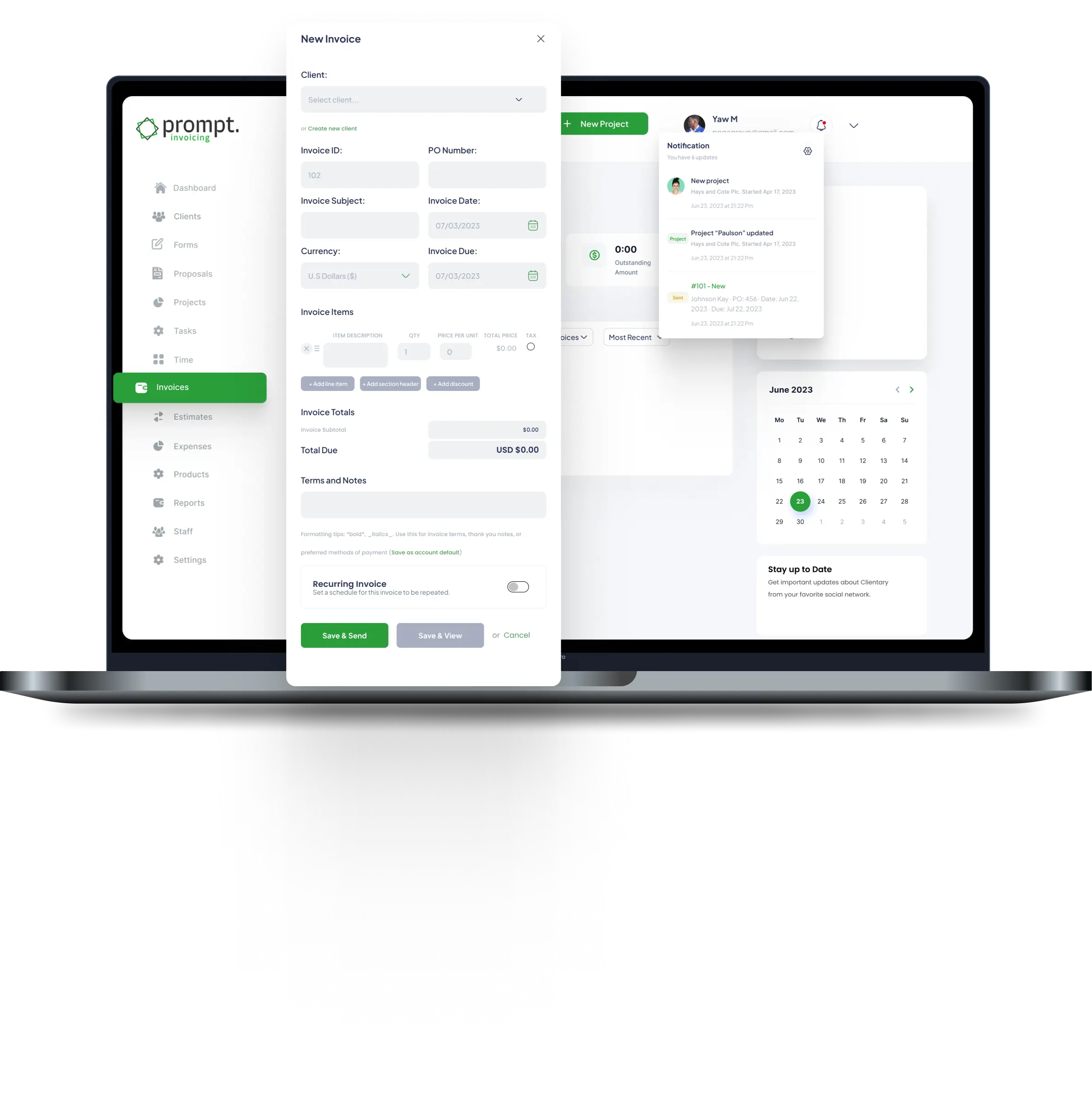
Prompt Integrated brings all of that together in one platform built for Ghanaian businesses — so that every step from contract to payment is organised, professional, and under your control. Get started with Prompt Integrated today.


Leave A Comment