

June 08, 2026
article by the prompt team

Ask any small business owner in Ghana what keeps them up at night, and cash flow will almost always come up. Not lack of sales. Not competition. Cash flow. The gap between what is coming in and what is going out — and the persistent, unsettling feeling that the two never quite balance the way they should.
What most business owners do not realise is that the biggest threat to their cash flow is often not the large, visible expenses. It is the smaller, quieter ones — the costs that never get recorded, the bills that creep up gradually, the tax obligations that only get attention when a deadline is already close. These are the hidden expenses that silently erode profits and make genuine financial clarity almost impossible to achieve.
The good news is that once you can see them clearly, you can do something about them. This guide identifies the main hidden expenses affecting Ghanaian SMEs and shows you how to take back control of your cash flow.
Here’s what we’ll cover:
- Small daily expenses that add up
- Supplier payments and bills
- Taxes that disrupt cash flow
- Recurring costs you might be ignoring
- How to take control of your business finances
- Final thoughts
1. Small daily expenses that add up
Every business day in Ghana comes with a stream of small costs that feel too minor to bother writing down. Transport to a supplier. Airtime for client calls. A ream of paper from the stationery shop around the corner. Fuel for a delivery. A small repair that needed doing before the day could continue.
Individually, none of these feel significant. Together, across a week, a month, and a year, they represent a substantial and largely invisible drain on your finances.
The problem is not that these costs exist. Every business has them. The problem is that when they go unrecorded, they disappear from your financial picture entirely. Your profit calculations become inaccurate. Your cash flow projections miss a meaningful chunk of your actual outgoings. And when you sit down at the end of the month wondering where the money went, these small daily expenses are a large part of the answer — but you have no record of them to point to.
Building the habit of recording every business expense, however small, is one of the highest-impact financial disciplines any Ghanaian business owner can develop. It does not need to be complicated. It just needs to be consistent.
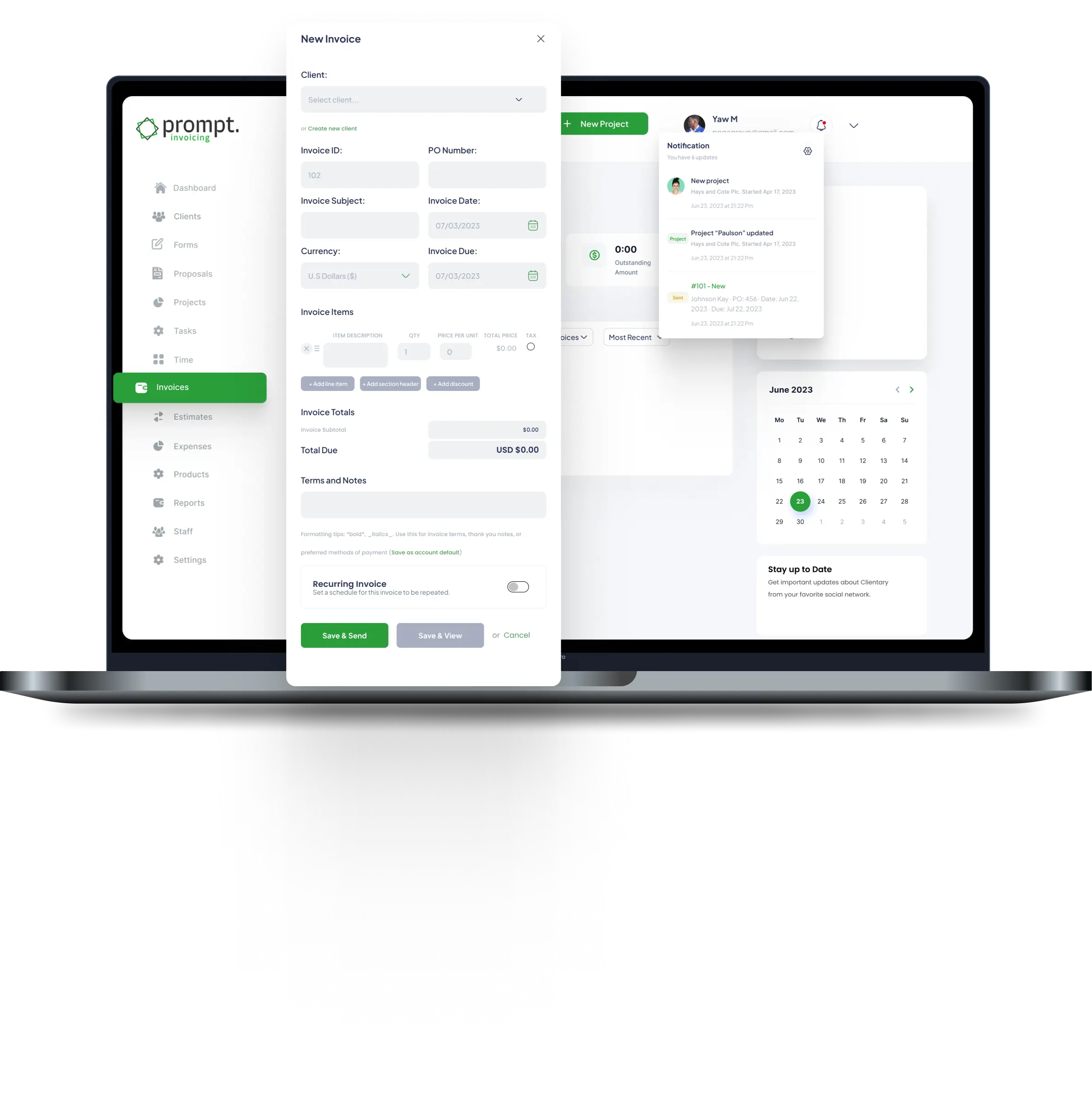
Prompt Integrated’s expenses tracking feature makes this straightforward — giving you a simple, organised way to log daily business costs in real time so that nothing gets lost and your financial picture stays accurate.
2. Supplier payments and bills that are not properly tracked
Supplier relationships are at the heart of most Ghanaian businesses. Whether you are sourcing fabric from Kantamanto, restocking inventory from a wholesale distributor in Accra, or paying a service provider for ongoing support, the money flowing to suppliers represents a significant portion of your operating costs.
But when those payments are made in cash without being recorded, when invoices are paid without being matched to the corresponding bill, or when supplier balances are not reconciled regularly, the financial damage is significant and largely invisible. You lose clarity on your true cost of goods. Your profit margins become impossible to calculate accurately. And the cumulative effect of untracked supplier payments can quietly push a nominally profitable business into a cash flow crisis.
This is a pattern the Association of Ghana Industries has consistently identified in its research on SME financial management challenges — the gap between what business owners believe their supplier costs are and what they actually are, simply because the tracking discipline is not in place.
3. Taxes that disrupt cash flow when you least expect it
Tax obligations are one of the most predictable sources of financial disruption for Ghanaian SMEs — and yet they consistently catch business owners off guard.
Income tax, value added tax, withholding tax — these are not surprises. The deadlines are known. The obligations are legal requirements. But when tax payments are not tracked and planned for throughout the year, they tend to arrive as a shock rather than a scheduled outgoing. Business owners find themselves scrambling to find funds that were never set aside, often at exactly the moment when cash flow is already under pressure.
The Ghana Revenue Authority has made significant strides in improving tax compliance processes for SMEs, including digital filing options that reduce the administrative burden. But the discipline of tracking your tax obligations throughout the year — knowing what you owe, when it is due, and whether you have the cash set aside to meet it — remains the responsibility of the business owner.
Treating tax payments as a recurring, planned expense rather than an occasional surprise is one of the most straightforward ways to reduce the financial stress that tax season brings. When you know what is coming and you have planned for it, it stops being a disruption and becomes simply another scheduled obligation.
4. Recurring costs that grow quietly in the background
Rent. Internet. Utility bills. Software subscriptions. Security services. These are the expenses that appear on your books every single month — and precisely because they are so regular, they tend to stop receiving proper scrutiny.
The risk with recurring costs is not that they are large in isolation. It is that they grow gradually without triggering any alarm. A utility bill that has crept up over twelve months. A subscription that was taken on for a specific purpose and renewed automatically long after that purpose expired. A service arrangement that made sense at one stage of the business but is no longer delivering value proportionate to its cost.
Businesses that do not review their recurring costs regularly find themselves paying for things they no longer need, at prices that have quietly risen beyond what they would accept if they were making the decision fresh today.
A straightforward habit — reviewing your recurring expenses quarterly and asking honestly whether each one is still earning its place in your budget — can recover meaningful cash flow without requiring any sacrifice to your core operations.
5. How to take control of your business finances
The hidden expenses described in this article are not unusual or unique to your business. They affect the majority of Ghanaian SMEs — and the reason they persist is not that business owners do not care about their finances. It is that without the right systems in place, staying on top of every category of expense simultaneously is genuinely difficult.
The path forward is straightforward. Record every daily expense consistently, no matter how small. Track every supplier payment and match it to the corresponding bill. Monitor your tax obligations throughout the year so that deadlines never arrive as a surprise. Review your recurring costs regularly and eliminate anything that is not delivering real value.
Each of these disciplines is manageable on its own. Together, they create a financial picture that is accurate, complete, and genuinely useful for making the decisions that will grow your business.
Final thoughts
Cash flow problems rarely appear out of nowhere. They build gradually, driven by small expenses that were never recorded, supplier costs that were never reconciled, taxes that were never planned for, and recurring bills that were never reviewed.
The businesses in Ghana that manage their cash flow well are not necessarily the ones generating the most revenue. They are the ones that know their numbers — all of them, including the small, quiet, easy-to-overlook ones that add up to a significant problem over time.
Start with visibility. Once you can see clearly where your money is going, every other financial decision becomes easier, more informed, and more likely to move your business in the right direction.
Prompt Integrated gives you that visibility — in one platform, built for the way Ghanaian businesses actually operate. Get started with Prompt Integrated today.









Leave A Comment