

June 05, 2026
article by the prompt team

Running a small business in Ghana takes everything you have. Your time, your energy, your focus — and a significant portion of your personal finances, especially in those early months when the line between your business money and your personal money can blur in ways you do not always notice until something goes wrong.
Here is the truth that many small business owners learn later than they should: how you manage your personal finances directly affects the health of your business. When your personal spending is out of control, you end up dipping into business funds to cover the gap. When you have no personal savings buffer, the first unexpected expense — a car repair, a medical bill, a school fee — becomes a business crisis rather than a personal inconvenience.
Tracking your personal expenses is not complicated. It does not require an accountant or a sophisticated system. It simply requires the discipline to know where your money is going — and the honesty to do something about what you find.
This guide walks through exactly why that discipline matters, and how building it alongside your business will make both stronger.
Here’s what we’ll cover:
- Know where your money is actually going
- Build a budget that reflects your real life
- The small daily costs that are quietly draining your finances
- Take control of your personal debt before it controls you
- Why every small business owner needs a personal emergency fund
- Make smarter financial decisions with clearer information
- Final thoughts
1. Know Where Your Money Is Actually Going
The first and most powerful benefit of tracking your expenses is simply this: you find out what is actually happening.
Most people — including most small business owners — have a rough sense of what they spend money on. But rough sense and reality are rarely the same thing. The actual picture, when you sit down and look at it properly, is almost always more revealing than you expect.
Maybe you are spending far more on transport each month than you realised. Maybe the combination of small daily purchases — a quick bite from a roadside vendor, airtime top-ups throughout the day, the occasional item picked up at the shop “just in case” — is adding up to a figure that would genuinely surprise you. Maybe your spending on social obligations — funerals, weddings, naming ceremonies, church contributions — is higher than your income comfortably supports, but you have never added it up before.
None of these things are problems you can address if you do not know they exist. Tracking your expenses gives you the awareness to see your financial life clearly — and clarity is where every meaningful change begins.
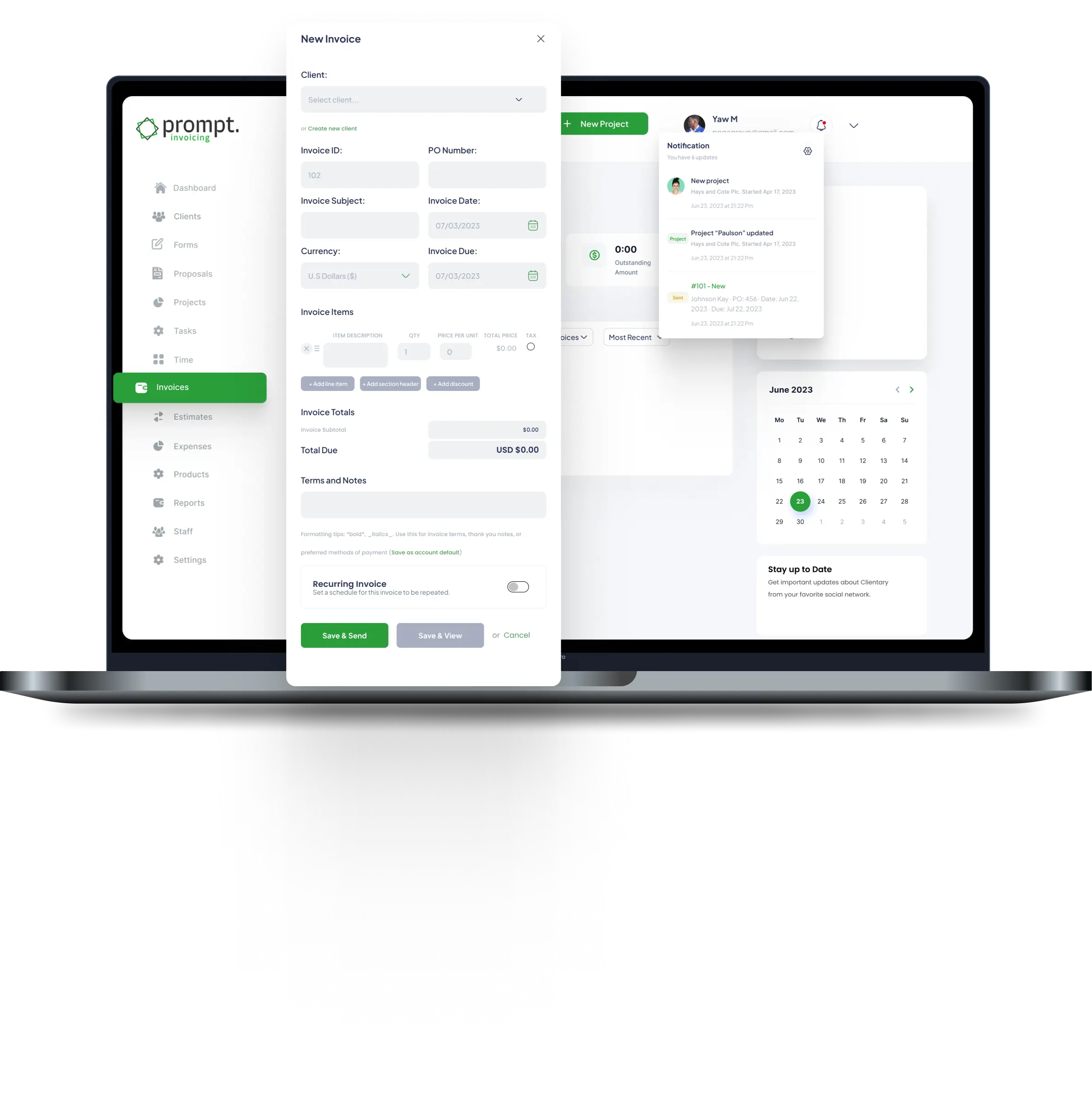
This same principle applies directly to your business. Prompt Integrated’s expenses tracking feature gives small business owners in Ghana a clear, real-time view of every business expense — so nothing slips through unnoticed and every financial decision is grounded in accurate information.
2. Build a Budget That Reflects Your Real Life
A budget built on guesswork is not really a budget. It is optimism dressed up as a plan.
To create a budget that actually works — one that allocates your income to housing, food, transport, family obligations, savings, and business needs in a way that is realistic and sustainable — you need accurate data about what you actually spend. Not what you think you spend. Not what you spent two years ago. What you are spending right now.
Once you have that data, budgeting becomes a much more grounded exercise. You can look at each category of spending and make conscious decisions about what is appropriate, what needs to come down, and where you want to direct more. You can set spending limits that reflect reality rather than aspiration — and limits you can actually keep are the only ones that help.
Budgeting also enables goal setting in a way that feels real rather than theoretical. Saving towards a piece of land in your home region. Building a fund for your children’s school fees. Creating a financial cushion that means the next business lean period does not feel like a crisis. These goals are achievable — but they require knowing what you have available to commit to them, and that requires knowing what you currently spend.
For Ghanaian households navigating the genuine financial pressures of rising living costs, the National Pensions Regulatory Authority of Ghana consistently highlights personal budgeting and savings discipline as foundational financial habits that protect long-term financial security.
3. The Small Daily Costs That Are Quietly Draining Your Finances
There is a particular kind of financial damage that is almost invisible until it has already been done: the accumulation of small, habitual expenses that individually feel insignificant but collectively represent a substantial drain on your finances.
A GHS 15 breakfast every morning. A GHS 30 data bundle every few days. A regular contribution to a group spend that you agreed to without really thinking about whether you could afford it. A subscription you signed up for and forgot about. These are not extravagances. They do not feel like financial mistakes in the moment. But when you add them up across a month, the total is often startling.
Tracking your expenses makes these patterns visible. And once they are visible, you have a choice — a choice you could not make before because you did not know the pattern existed. You can decide deliberately which habits are worth what they cost, and which ones you are maintaining out of inertia rather than genuine value.
Redirecting even a modest amount from habitual spending that does not serve you — toward debt reduction, savings, or business investment — can make a meaningful difference to your financial position over time. The key is being able to see it clearly enough to act on it.
4. Take Control of Your Personal Debt Before It Controls You
Personal debt is a reality for many Ghanaian small business owners — whether that is a loan from a microfinance institution, a balance on a mobile credit product, an informal arrangement with family or friends, or a credit facility that made sense when it was taken on but has since become a burden.
Debt does not manage itself. Left unexamined, it tends to grow — through interest, through additional borrowing to cover shortfalls, through the compounding effect of making minimum payments without making real progress on the principal.
Tracking your expenses brings your debt situation into focus. It shows you exactly what you are paying each month in debt servicing costs, which obligations carry the highest interest rates, and what your realistic capacity is to accelerate repayment on specific debts.
With that picture clear, you can build a deliberate debt reduction strategy — prioritising the most expensive debt first, making additional payments when your cash flow allows, and tracking your progress over time in a way that is genuinely motivating. Seeing a debt balance fall month by month because you have a plan and you are sticking to it is a fundamentally different experience from simply making payments and hoping for the best.
5. Why Every Small Business Owner Needs a Personal Emergency Fund
If you run a small business in Ghana, you already know that income can be unpredictable. A slow month, a delayed payment from a client, an unexpected cost on the business side — any of these can create cash flow pressure that spills over into your personal finances almost immediately.
Without a personal emergency fund, any unexpected expense — a sudden illness, a vehicle breakdown, a household repair — becomes a crisis that has to be solved by disrupting something else. Often that something else is your business.
Tracking your personal expenses is what makes building an emergency fund possible in practice. When you know exactly what you spend each month, you can identify a realistic amount to set aside consistently — even if it starts small. The discipline of tracking creates the margin that makes saving possible.
Financial advisors generally recommend building an emergency fund equivalent to three to six months of essential living expenses. For a Ghanaian small business owner, having that cushion means that when life throws something unexpected at you — as it reliably does — you can handle it without destabilising your business in the process.
6. Make Smarter Financial Decisions With Clearer Information
Every significant financial decision you face — whether to take on a new loan, whether you can afford to hire a part-time assistant, whether to commit to a new lease or investment — is made better by having accurate, current information about your personal financial position.
Without that information, decisions get made based on a vague sense of how things are going financially — which is almost never as accurate as it feels. With it, you can evaluate an opportunity or an obligation against what is actually true about your situation, not what you hope or assume is true.
This connection between personal financial clarity and business decision-making is direct and significant. A business owner who knows their personal finances are stable and their emergency fund is solid can take calculated risks and make strategic decisions with confidence. One who is uncertain about their personal position tends to make more conservative, reactive decisions — or, conversely, takes on more financial risk than is wise because they do not have a clear picture of what they can actually afford.
Final thoughts
Tracking your personal expenses will not solve every financial challenge you face as a small business owner in Ghana. But it will give you something genuinely valuable: clarity. And clarity — knowing where you stand, where your money is going, and what you can realistically do about it — is the foundation of every good financial decision you will ever make.
Start simply. A notebook. A spreadsheet. A mobile app. The tool matters less than the habit. Begin recording what you spend, review it honestly at the end of each week, and let what you find guide your next steps.
For the business side of that financial picture, Prompt Integrated gives Ghanaian small business owners a single platform to track expenses, manage invoicing, run payroll, and stay on top of their financial position — so that the business and personal sides of your financial life are both running with the clarity and control they deserve. Get started with Prompt Integrated today.








Leave A Comment