

September 03, 2026
article by the prompt team

Every successful business in Ghana has two things working in its favour: a clear vision of where it is going, and a practical plan for how to get there.
Your business plan covers the financial and operational roadmap. But the engine that drives growth — the thing that gets your products and services in front of the right people, builds your reputation, and converts strangers into loyal customers — is your marketing plan.
Whether you are a solo entrepreneur managing your own marketing alongside everything else, or a growing business with a small team dedicated to it, having a structured marketing plan makes the difference between activity that feels busy and activity that actually produces results.
This guide walks you through a proven five-step approach — built around full-funnel marketing — that any Ghanaian small business can apply, regardless of budget or industry.
Here’s what we’ll cover:
- What a marketing plan is for
- Step 1: Examine your current situation and set clear goals
- Step 2: Identify your audience and build brand awareness
- Step 3: Drive customer interest
- Step 4: Convert interest into purchases
- Step 5: Foster relationships to encourage repeat business
- Final thoughts
What a marketing plan is for
Ghana’s business landscape is more competitive than it has ever been. In almost every sector — from food and retail to professional services, technology, and logistics — there are more options available to customers than there were five years ago. Standing out requires more than a good product. It requires a deliberate, consistent effort to build your brand, reach the right people, and give them compelling reasons to choose you over everyone else.
A well-constructed marketing plan helps your business do exactly that. It allows you to build brand recognition in your market, increase customer engagement, establish trust and authenticity, generate positive word of mouth, and support your sales efforts with the kind of consistent, strategic communication that produces real commercial results.
Step 1: Examine your current situation and set clear goals
Before you can build an effective marketing plan, you need an honest picture of where your business currently stands. This is not the time for flattering assumptions — it is the time for clear-eyed reflection on your strengths, your weaknesses, and the environment in which you are operating.
A SWOT analysis is one of the most practical tools for this. SWOT stands for Strengths, Weaknesses, Opportunities, and Threats — and working through each category honestly gives you the strategic foundation that your marketing plan needs to be built on.
Some useful questions to guide your SWOT analysis:
Are you a new business starting from scratch, or an established business looking to revamp your approach? What type of customer do you most want to attract? What does your business do genuinely well — and how does that represent a competitive advantage in your specific market? Where are your weaknesses, and how might competitors exploit them? What opportunities exist in Ghana’s market that your business is positioned to capture? And what threats — from competitors, from economic conditions, from changing customer behaviour — do you need to plan around?
Once you have that honest picture, you can set marketing goals that are genuinely useful. Vague goals like “grow the business” or “get more customers” are not enough. Your goals need to be specific, measurable, and realistic — the kind you can actually track and hold yourself accountable to.
A goal like “increase monthly revenue from new customers by 20% within the next quarter” is specific and measurable. A goal like “become better known on social media” is not. Write down your most important goals, keep them visible, and check in on them regularly — weekly, monthly, or quarterly depending on the timeline involved.
Short-term goals might focus on building your online following, increasing your monthly enquiry rate, or launching a new product. Long-term goals might involve expanding into a new region of Ghana, building a strong enough brand to attract corporate clients, or growing your team.
Step 2: Identify your audience and build brand awareness
Marketing that tries to reach everyone tends to reach no one particularly well. The most effective marketing is directed at a clearly defined group of people whose needs, interests, and behaviours you understand well enough to speak to directly.
If your business serves individual consumers — a restaurant in Accra, a fashion brand in Kumasi, a beauty service in Takoradi — your customer profile should include demographic details like age, location, income level, lifestyle, and the specific circumstances under which they would seek out your product or service.
If your business serves other businesses — a logistics company, a professional services firm, a B2B supplier — your profile should focus on the type of business, the size of the organisation, the industry sector, the decision-maker’s job title, and the specific problem your business solves for them.
The more clearly you can describe your ideal customer, the more precisely you can target your marketing — and the less you waste on reaching people who are unlikely to buy.
With your audience defined, the next task is building awareness of your brand among that audience. In Ghana’s current digital landscape, this means a combination of approaches:
Content marketing — blog posts, guides, and educational articles that demonstrate your expertise and improve your visibility in search results. Social media — platforms like Instagram, Facebook, TikTok, and LinkedIn are deeply embedded in how Ghanaian consumers and businesses discover new brands. Consistent, quality content that speaks to your audience’s interests and needs builds recognition over time. WhatsApp Business — for many Ghanaian small businesses, WhatsApp is one of the most direct and effective channels for customer communication and promotion. Brand ambassadors and community engagement — in Ghana’s relationship-driven market, word of mouth and trusted personal recommendations remain among the most powerful marketing forces available. Building genuine relationships within your community and your industry creates the kind of organic advocacy that paid advertising cannot replicate.
Step 3: Drive customer interest
Building awareness is the top of the funnel. Once people know your brand exists, the next challenge is moving them from passive awareness to genuine interest in what you specifically offer.
At this stage, storytelling becomes one of your most powerful tools. People do not just buy products — they buy into brands that feel relevant to their lives, that solve real problems they recognise, and that communicate in a way that feels authentic rather than corporate.
Think about the specific problems your product or service solves for customers in Ghana. A busy professional in Accra. A market trader in Kejetia who needs a faster way to manage her finances. A growing SME owner who is overwhelmed by payroll and invoicing. Each of these people has a specific pain point — and marketing that speaks directly to that pain point, in language that feels human and honest, is marketing that converts interest into engagement.
Create content that demonstrates your value through real examples, customer stories, and specific outcomes. Show your audience not just what you offer, but what changes for them when they choose you.
Step 4: Convert interest into purchases
Interest without conversion is marketing that has done half the job. The moment your customer moves from curious to ready to buy is the moment everything before it either pays off or does not.
At this stage, the smoothness of the buying experience matters enormously. If your customer has to work hard to pay you — hunting for your bank details, making a manual transfer, sending a screenshot as proof — every step of that friction increases the chance they will not complete the purchase.
In Ghana’s digital economy, giving customers a fast, professional, and convenient way to complete their purchase is essential. This means clear product or service information, a straightforward payment process, and the ability to pay by mobile money — because MTN MoMo and other mobile payment platforms are how a significant proportion of Ghanaians prefer to transact.
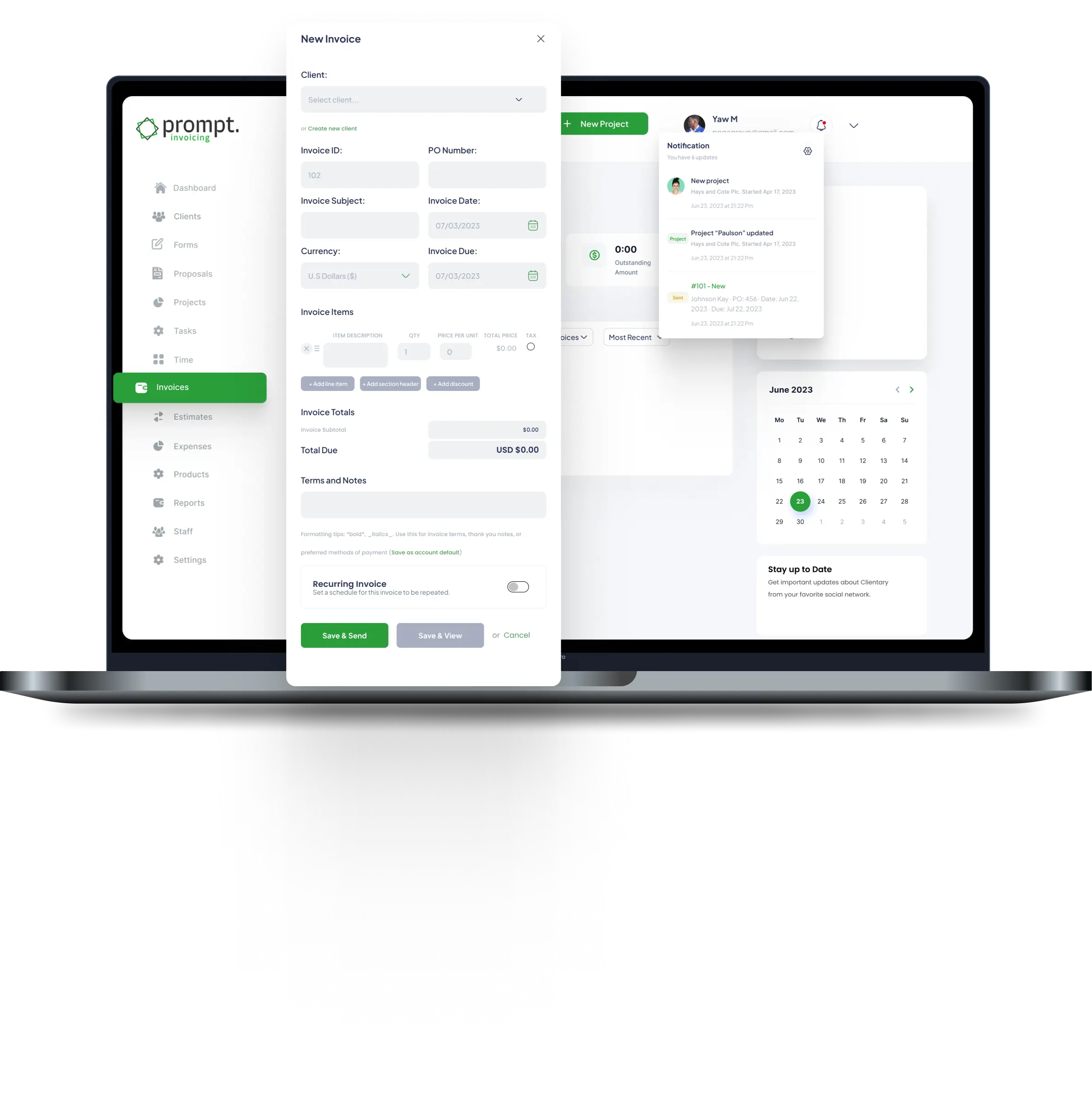
Prompt Integrated’s invoicing feature helps you send professional quotes and invoices that include direct payment links — so the gap between a customer deciding to buy and actually completing the transaction is as short as possible. For service businesses especially, this kind of frictionless billing experience is a direct driver of conversion.
Step 5: Foster relationships to encourage repeat business
The final step of the full-funnel approach is the one that produces the most sustainable long-term growth: keeping the customers you have already won.
Acquiring a new customer in Ghana’s competitive market is expensive — in time, in marketing spend, and in the effort of building trust from scratch. Retaining an existing customer costs a fraction of that. And existing customers who are genuinely satisfied do something that no advertising budget can replicate: they refer others.
Building customer loyalty means staying in contact with your customers beyond the transaction. It means following up after a sale to ensure they are satisfied. It means offering loyalty incentives — discounts, priority access, or small rewards — that make repeat customers feel valued. It means maintaining the quality of your service consistently, so that every experience reinforces rather than undermines the trust you have worked to build.
It also means keeping your operational side of the relationship professional and seamless — because how you handle billing, payroll, and project delivery reflects on the overall experience your customers have of doing business with you.
Final thoughts
A marketing plan is not just a document you write once and file away. It is a living framework that guides how you communicate with your market, how you allocate your marketing budget, and how you build the kind of brand that Ghanaian customers choose consistently and recommend enthusiastically.
The five steps covered in this guide — examining your situation and setting goals, identifying your audience and building awareness, driving interest, converting that interest into purchases, and fostering long-term loyalty — work together as a system. Each step builds on the one before it, and each one requires consistent attention and honest evaluation.
Start where you are. Define your audience clearly. Tell stories that connect. Make it easy to buy. And invest in the relationships that will generate the most sustainable growth your business can achieve.
Prompt Integrated is built to support the operational foundation that great marketing depends on — keeping your finances, your team, and your projects running smoothly so you can focus on building the brand and the customer relationships that will take your Ghanaian small business forward. Get started with Prompt Integrated today.










Leave A Comment