

May 21, 2026
article by the prompt team

Ghana is one of the most exciting places on the continent to build a business right now. A young, ambitious population. A growing digital economy. A culture that increasingly celebrates entrepreneurship and rewards those willing to back themselves. From tech startups in Accra’s Osu and Labone neighbourhoods to small retail ventures in Kumasi’s Kejetia market, the energy around self-employment and business creation is genuinely infectious.
But excitement alone does not build a business. And anyone who has actually tried to start one in Ghana will tell you honestly that the journey comes with real, sometimes brutal challenges that no amount of enthusiasm fully prepares you for.
This is not an article designed to discourage you. It is designed to give you an honest picture of what you are walking into — because understanding the obstacles ahead of time is one of the most powerful advantages any founder can have.
Here’s what we’ll cover:
- Difficulty accessing startup capital
- High cost of business registration and compliance
- Unreliable power supply and operational disruptions
- Limited access to reliable market data
- Bureaucracy and regulatory delays
- Inadequate infrastructure
- Skills shortages and hiring challenges
- High competition in saturated markets
- Difficulty accessing modern technology and digital tools
- Inconsistent policy environment and economic instability
- Final thoughts
1. Getting your hands on startup capital
Let us start with the one that stops more Ghanaian entrepreneurs in their tracks than almost anything else: money.
The idea is there. The passion is there. The market opportunity is visible. But when you walk into a bank and ask for a loan to get started, the conversation quickly runs into walls. High collateral requirements. Long credit history demands. Interest rates that make the maths very difficult to justify for an early-stage business.
Ghana’s financial system has historically been risk-averse when it comes to new ventures, and for entrepreneurs without property to put up as security or years of formal banking records, the traditional route to funding is genuinely hard.
Picture a young fashion designer in Tema who has built a loyal client base through word of mouth and Instagram, but cannot secure a loan to buy the equipment she needs to scale. Her business is real. Her customers are real. But without collateral, the bank does not see what she sees.
The way through this is to start earlier and cast a wider net. Bootstrapping — using personal savings to build something small and prove the concept — remains one of the most reliable first steps. Beyond that, Ghana has a growing ecosystem of alternative funding options worth exploring seriously.
The Ghana Venture Capital Trust Fund provides financing to SMEs through licensed venture capital firms and is specifically designed for businesses that cannot access conventional bank loans. Susu — the traditional rotating savings and credit model that has existed in Ghanaian communities for generations — remains a practical and accessible source of early capital for many founders. The Tony Elumelu Foundation offers seed funding and mentorship to African entrepreneurs annually, and the application process is open to Ghanaian founders across sectors.
Building a solid, well-researched business plan also opens doors to grant competitions and impact investor programmes that do not require collateral — just evidence that you know what you are doing.
2. The cost of doing things officially
Ghana has made genuine progress in simplifying the process of registering a business. But for an early-stage entrepreneur working with limited funds, the fees involved in registration, licensing, and ongoing compliance can still feel like a significant mountain to climb.
A small food processing business, for example, does not just need to register with the Registrar General’s Department. It also needs permits from the Food and Drugs Authority, approvals from the district assembly, and potentially additional sector-specific certifications — each with its own cost, timeline, and process. For someone just getting started, this can feel overwhelming before they have even made their first sale.
The practical advice here is to start with the simplest business structure that suits your current stage. A sole proprietorship is cheaper and faster to register than a limited liability company, and you can always upgrade as the business grows. The RGD’s online portal has made registration significantly more accessible — use it. And connect with entrepreneur support organisations like the Ghana Enterprises Agency, which offers guidance specifically designed to help new business owners navigate compliance pathways without unnecessary cost.
3. Power cuts and what they cost you
If you have spent any time running a business in Ghana, you already know that unreliable power is not a hypothetical risk — it is a recurring operational reality.
Dumsor — the load shedding that has periodically disrupted electricity supply across the country — has cost Ghanaian businesses hundreds of millions of cedis in lost productivity, damaged equipment, and spoiled inventory over the years. Even in more stable periods, voltage fluctuations can damage sensitive equipment, and electricity tariffs remain among the higher costs that small businesses have to absorb.
For a small cold-storage business keeping perishable goods, a few hours without power is not an inconvenience — it is a direct financial loss. For a printing business with tight deadlines, an unplanned outage can cost a client relationship.
The Ghana Energy Commission provides information on energy efficiency programmes and renewable energy options that businesses can access. Solar solutions, in particular, have become increasingly affordable and practical for small businesses, and the investment typically pays back through reduced electricity bills and the operational reliability that comes with energy independence. Generators remain a common backup, but solar is increasingly the smarter long-term play.
4. Finding data you can actually trust
Making good business decisions requires good information. And in Ghana, finding reliable, up-to-date market data for many sectors is genuinely difficult.
An entrepreneur wanting to enter the shea butter export market, for example, might spend weeks trying to find verified figures on demand trends, pricing benchmarks, or the competitive landscape — only to find that the most recent data is years old, or that different sources contradict each other entirely. In informal sectors especially, the absence of reliable market intelligence is a real handicap.
The Ghana Statistical Service is the most authoritative source of economic and demographic data for the Ghanaian market and publishes regular reports that are freely accessible. The Association of Ghana Industries publishes sector-specific insights and business confidence surveys that can be invaluable for entrepreneurs trying to understand industry dynamics. For more granular intelligence, small-scale surveys, customer interviews, and pilot studies conducted directly in your target market are often more useful than anything you will find in a published report.
Joining an industry association relevant to your sector is also worth doing early — the insider knowledge shared within those networks is frequently more current and more actionable than anything publicly available.
5. Navigating bureaucracy and regulatory delays
Ghana’s regulatory environment has improved significantly over the past decade, and the government has invested in digitising a number of previously paper-heavy processes. But anyone who has tried to obtain permits, register property, or navigate sector-specific regulatory approvals will know that delays remain a very real feature of the landscape.
A logistics startup waiting on operating permits can find itself unable to trade for months — not because its business model is flawed, but because the approval process moves at its own pace regardless of the urgency on the founder’s side.
The Ghana Investment Promotion Centre is the primary body for supporting investors and entrepreneurs navigating Ghana’s regulatory environment, and their business advisory services are worth engaging early. Starting applications well ahead of when you actually need approvals, following up consistently, and using every available digital portal to avoid unnecessary in-person visits are all practical habits that experienced Ghanaian founders swear by.
6. Infrastructure gaps that slow everything down
Roads, internet connectivity, and supply chain reliability are the invisible backbone of any business operation — and in Ghana, the quality and consistency of that backbone varies enormously depending on where you are.
A delivery business serving customers in rural areas of the Northern or Volta regions can find that poor road conditions make last-mile logistics slow, expensive, and unreliable. A digital services business dependent on stable internet connectivity may find that a single provider is not enough to guarantee the uptime their clients expect.
Strategic location decisions — situating your business close to your primary customers or key suppliers — can reduce the impact of infrastructure limitations significantly. Building relationships with multiple logistics partners gives you flexibility when primary routes fail. And for internet connectivity, using multiple providers as backup is a low-cost insurance policy that many Ghanaian business owners treat as standard practice.
Farmerline — a Ghanaian agritech company — is a useful example of a business that has built its model around the infrastructure realities of rural Ghana rather than against them, using mobile technology to reach smallholder farmers in areas where traditional infrastructure cannot.
7. Finding the right people
Ghana has a large and growing workforce, and the country’s universities and technical institutions produce thousands of graduates every year. But the specific skills that modern businesses need — software development, digital marketing, data analysis, financial management — are in high demand and genuinely short supply.
A tech startup trying to hire a qualified software developer locally will quickly discover that the best candidates have multiple options and price accordingly. In creative and professional services, the gap between the skills businesses need and the skills readily available in the market is a recurring frustration for founders.
In-house training for entry-level employees — investing in people with the right attitude and bringing them up to speed on the specific skills your business needs — is a strategy that many of Ghana’s most successful SMEs have used effectively. Partnerships with institutions like the University of Ghana and Ashesi University for internship and graduate placement programmes can give you access to talented young people before they enter the broader job market. Remote and hybrid working arrangements have also significantly expanded the talent pool available to Ghanaian businesses willing to look beyond their immediate geography.
8. Standing out in a crowded market
Certain sectors in Ghana — food services, fashion, retail, beauty — are popular precisely because they are accessible. Lower barriers to entry mean more people give them a try, which means competition in these spaces is fierce.
Opening a new restaurant in Accra today means entering a market where dozens of similar establishments are already competing for the same customers within walking distance. A clothing boutique in Kumasi is competing not just with neighbouring shops, but with online sellers, second-hand markets, and imported fast fashion.
The businesses that survive and grow in saturated markets are almost never the ones competing on price alone. They are the ones that have invested in a clear, compelling identity — a reason for customers to choose them specifically, and keep coming back. Better service. A niche product that nobody else is offering. A brand that people feel something about.
Digital marketing has become increasingly important in this context. Hubtel — one of Ghana’s leading digital commerce platforms — provides tools that help small businesses reach customers online and build the kind of digital presence that drives repeat business. Investing in your online visibility is no longer optional in Ghana’s competitive market. It is a baseline requirement.
9. Getting access to the right tools and technology
Technology can transform how a small business operates — but the cost of accessing it, and the knowledge required to use it well, remain genuine barriers for many Ghanaian entrepreneurs.
A small retail business that is still doing its bookkeeping by hand is not necessarily behind because its owner lacks ambition. It may simply be that digital accounting systems have felt too expensive, too complicated, or too difficult to justify at an early stage. The result is a business that is harder to manage, harder to scale, and harder to present credibly to investors or financial institutions when the time comes.
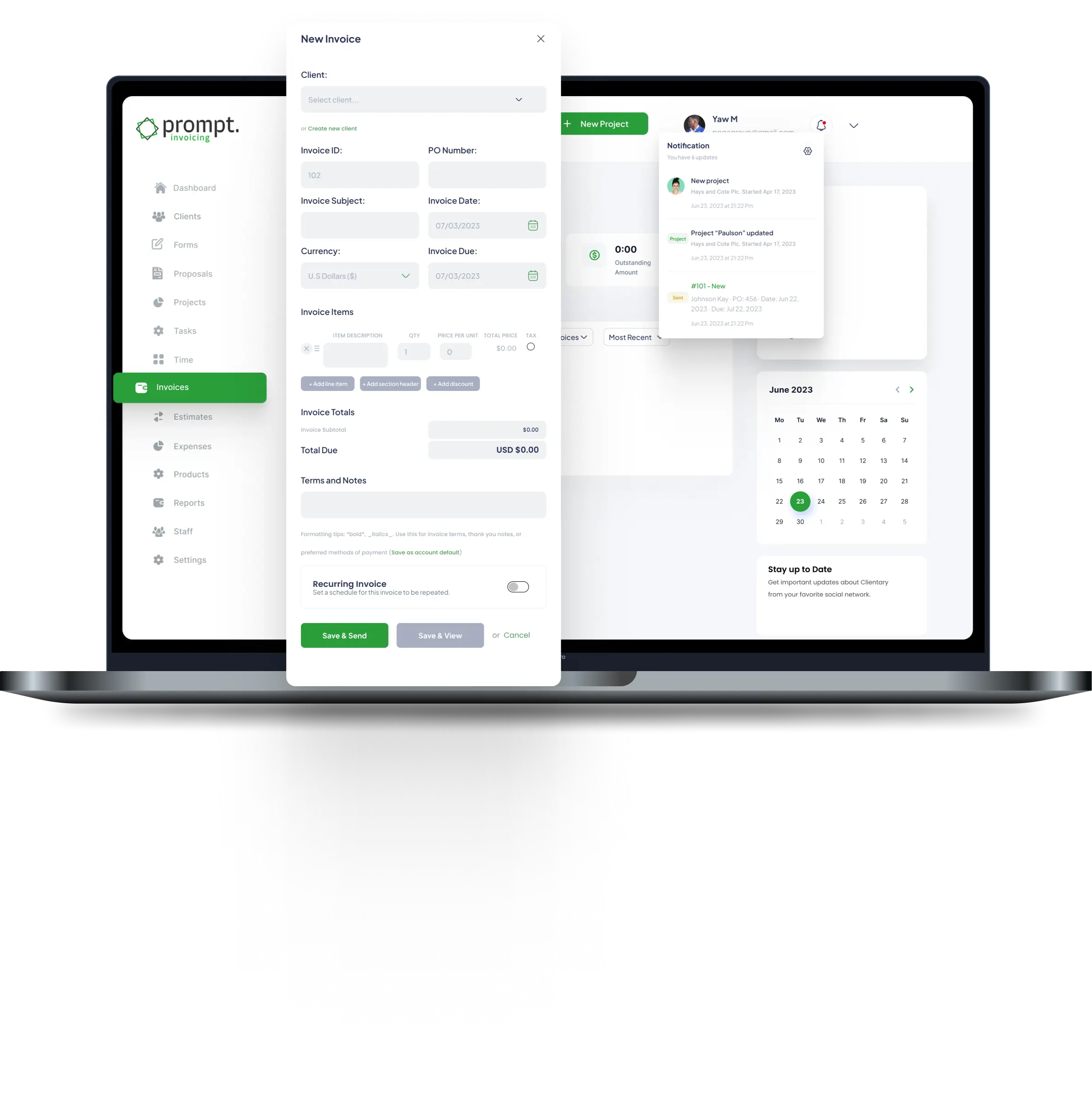
The good news is that affordable, mobile-first business management tools designed specifically for African markets have made significant strides in recent years. Prompt Integrated is one of them — a cloud-based platform built for Ghanaian SMEs, freelancers, and contractors that brings invoicing, expense tracking, payroll management, and project management together in one accessible place. Starting with the right tools early makes everything that comes later — growth, compliance, investor conversations — significantly easier.
Ghana’s network of tech hubs, including MEST Africa in Accra, also offers subsidised access to tools and mentorship for early-stage businesses willing to engage with the ecosystem.
10. Planning through economic uncertainty
Ghana’s economy is dynamic — which is a polite way of saying that it can move in unpredictable directions. Inflation, currency depreciation, and shifts in government policy are realities that Ghanaian business owners have to factor into their planning in ways that entrepreneurs in more stable economies do not.
A business that imports raw materials and prices its products in cedis faces a genuine challenge when the cedi depreciates against the dollar or pound — its costs go up, but raising prices risks losing customers who are also feeling the squeeze. The businesses that navigate this best are the ones that have built resilience into their model from the start.
The Bank of Ghana publishes regular monetary policy updates and economic data that help business owners stay informed about the macroeconomic environment. Diversifying your supplier base — so that no single source of materials or services can hold your business hostage during a currency shock — is a practical hedge. Building a financial buffer that can absorb three to six months of operating costs gives you the room to make strategic decisions rather than desperate ones when conditions tighten.
Staying connected to business associations like the Ghana Chamber of Commerce and Industry keeps you informed about policy changes early enough to adapt, rather than being caught off guard.
Final thoughts
Starting a business in Ghana is genuinely hard. Anyone who tells you otherwise has either not tried it, or has conveniently forgotten what the early days actually felt like.
But hard is not the same as impossible. Every challenge described in this article has been navigated successfully by Ghanaian entrepreneurs before you — people who started with less money, less experience, and fewer resources than you might imagine, and built something real and lasting through a combination of preparation, adaptability, and sheer persistence.
The founders who make it are not necessarily the most talented or the best funded. They are the ones who go in with clear eyes, build the right habits early, surround themselves with people who know what they are doing, and use every tool available to run their businesses as efficiently as possible.
Prompt Integrated is built to be one of those tools — giving Ghanaian entrepreneurs a single platform to manage their invoices, expenses, payroll, and projects from day one, so the operational side of running a business never becomes the thing that holds the bigger vision back. Get started with Prompt Integrated today.










Leave A Comment