

May 07, 2026
article by the prompt team

Running a business is one of the most rewarding things you can do. But if you are honest about it, it is also exhausting. Every single day brings a fresh set of decisions — what to stock, what to charge, where to spend, who to focus on — and the pressure to get those calls right never really lets up.
Here is the uncomfortable truth that most business owners eventually arrive at: guessing is expensive. Every decision made on instinct alone, without any data behind it, is a gamble. Sometimes it pays off. Often it does not. And the cost of those misses — wasted stock, underperforming campaigns, pricing that quietly erodes your margins — adds up faster than most people realise.
The good news is that you do not need to be a data scientist to make smarter decisions. You just need to know which numbers to look at and what to do with them. This guide breaks it down into five practical, actionable decisions that can genuinely shift the trajectory of your business.
Here’s what we’ll cover:
- Identifying your top-selling products
- Understanding your most valuable customers
- Cutting costs that are not delivering value
- Pricing your products strategically
- Tracking cash flow and marketing performance in real time
1. Know exactly which products are making you money
Not everything on your shelves or in your service catalogue is pulling its weight. Some products fly out the door and generate strong margins. Others sit there, tying up cash and storage space, contributing very little to your bottom line.
The problem is that without tracking your sales data properly, it is almost impossible to tell the difference. You might be devoting significant marketing budget and shelf space to products that are quietly underperforming, while your real revenue drivers are not getting nearly enough attention.
Data-driven decision-making starts here — with a clear, honest picture of what is actually selling and what is not. Once you have that, the path forward becomes obvious: concentrate your marketing, your stock investment, and your energy on the products that are genuinely driving growth. Pull back on the slow movers. Free up the cash they are sitting on and put it to better use.
For Ghanaian SMEs especially, where capital is often tight and storage space comes at a premium, this single shift in thinking can make a meaningful difference to both your cash position and your profitability.
2. Understand which customers are actually driving your revenue
Here is something that surprises many business owners when they first look at the data: a relatively small percentage of your customers are almost certainly responsible for a disproportionately large share of your revenue.
Some customers buy frequently and spend generously. Others make a single purchase and disappear. Some require enormous amounts of your time and energy while contributing very little financially. Without segmenting your customer base and understanding who falls into which category, you end up treating everyone the same — which means your most valuable customers are not getting the attention they deserve, and you are spending resources on relationships that are unlikely to grow.
Look at your customer data through the lens of purchase frequency, average order value, and overall engagement. Use what you find to build smarter retention strategies, identify upselling opportunities, and design loyalty programmes that reward the customers who matter most to your business.
This is not about ignoring smaller customers. It is about being intentional with where you direct your energy — and making sure your most valuable relationships are actively nurtured rather than taken for granted.
3. Cut the costs that are not earning their place
Every business has them — expenses that made sense at some point, or that crept in gradually, and are now quietly draining profit without delivering meaningful value in return. Unused software subscriptions. Supplier arrangements that have not been renegotiated in years. Operational habits that were never really examined.
For SMEs, where margins are often thinner and every cedi counts, this kind of cost creep can be genuinely damaging. The challenge is that these expenses rarely announce themselves. They sit in the background, small enough individually to avoid scrutiny, but significant in aggregate.
The fix is straightforward: review your expenses regularly and ask a simple question about each one — is this directly contributing to revenue or growth? If the answer is no, it is a candidate for elimination or renegotiation. The savings you unlock can then be redirected into areas that actually move the needle: marketing, product development, staff training, or technology that improves how you operate.
Prompt Integrated’s expenses management feature makes this kind of regular review practical rather than painful, giving you a clear, categorised view of where your money is going so nothing slips through unnoticed.
4. Price with intention, not instinct
Pricing is one of the most powerful levers available to any business owner — and one of the most commonly mishandled. Set your prices too low and you attract customers, but you sacrifice the margins you need to reinvest and grow. Set them too high without sufficient justification and you price yourself out of the market.
Many SME owners set their prices based on what feels right, or what competitors appear to be charging, without ever really interrogating whether those numbers are working for their business. The result is pricing that is essentially arbitrary — and arbitrary pricing is leaving money on the table.
A smarter approach uses actual sales data and customer behaviour to inform pricing decisions. Test small, deliberate adjustments and track their impact on both revenue and customer response. You will quickly learn where your pricing sweet spot lies — the point at which you are maximising revenue without sacrificing the customer relationships you have worked hard to build.
For further reading on building a pricing strategy grounded in evidence, the Chartered Institute of Marketing offers accessible guidance relevant to growing businesses across Africa and beyond.
5. Track your cash flow and marketing performance in real time
These two might seem like separate topics, but they belong together because they share the same underlying principle: what you do not measure, you cannot manage.
Cash flow is the lifeblood of any business. A company can be profitable on paper and still find itself in serious trouble if cash is not moving through the business predictably. Monitoring your cash flow in real time — knowing what is coming in, what is going out, and when — gives you the visibility to plan ahead, avoid shortfalls, and make financing decisions from a position of clarity rather than panic.
Marketing performance works the same way. Not every campaign, channel, or piece of content delivers results. Some generate strong returns. Others consume budget without producing meaningful revenue. Without tracking conversion rates and return on investment across your different channels, you are essentially flying blind — spending money without knowing whether it is working.
The discipline is the same in both cases: look at the numbers regularly, be honest about what they are telling you, and act on what you find. Double down on the marketing channels that are genuinely generating revenue. Pull back on those that are not. And keep your cash flow visible at all times so you are never caught off guard.
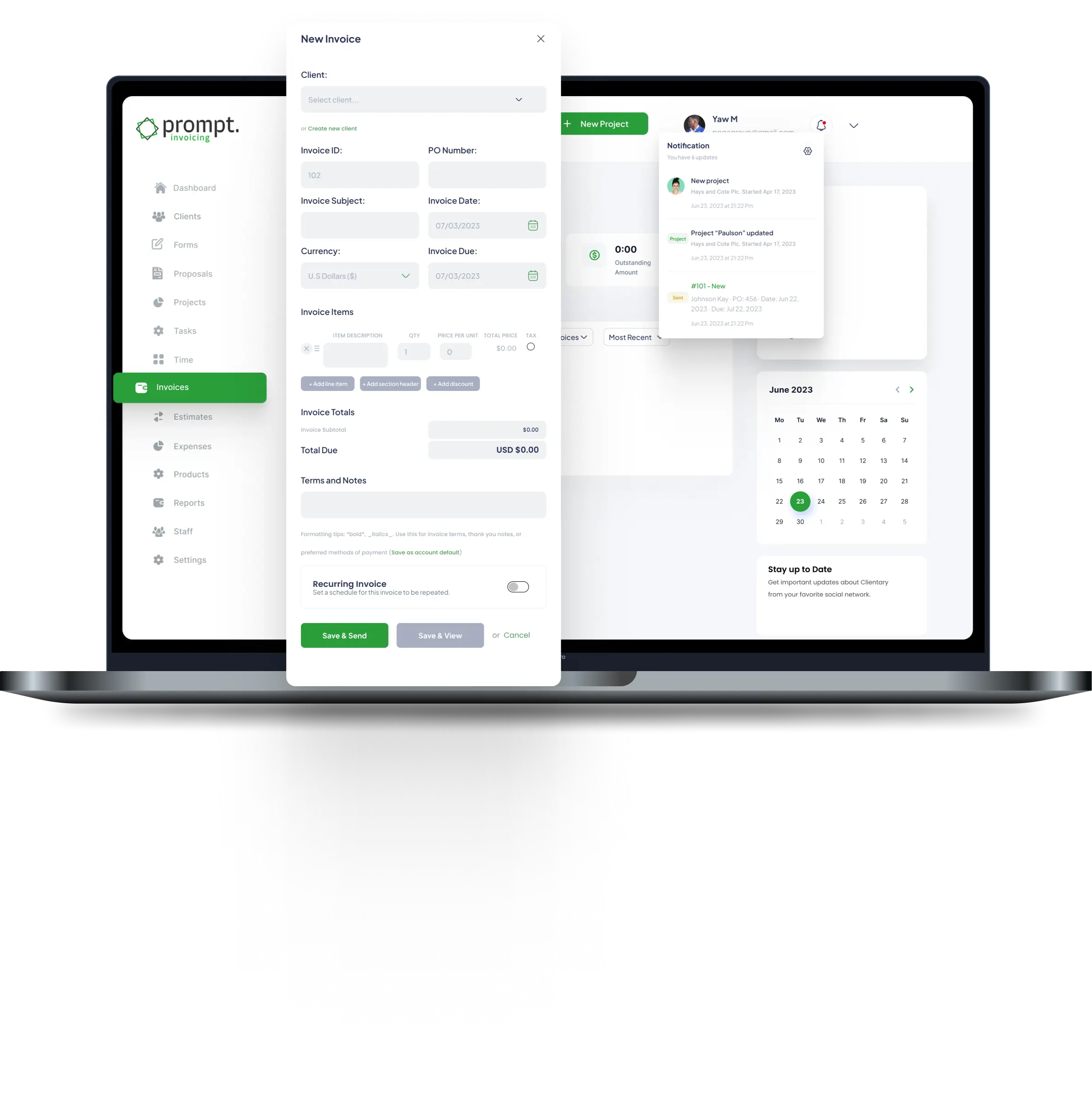
Prompt Integrated brings both of these capabilities together in one platform — giving you real-time visibility into your cash position through invoicing and expenses tracking, while project management tools help you keep your team and your marketing activities organised and accountable.
Start making decisions your business can actually build on
The difference between businesses that grow steadily and those that stagnate is rarely about luck or even effort. It is almost always about the quality of the decisions being made — and the quality of decisions is directly tied to the quality of information behind them.
SMEs that commit to data-driven decision-making gain something genuinely valuable: clarity. Clarity about what is working and what is not. Clarity about where to invest and where to pull back. Clarity that turns daily business management from a guessing game into something far more purposeful and far less stressful.
You do not need to overhaul everything at once. Start with one area — your top-selling products, your most valuable customers, or your expense review — and build the habit from there. The insight compounds quickly.
And when you are ready for a platform that puts all of this data in one place, Prompt Integrated is built for exactly that. From invoicing and payroll to expenses and project management, it gives Ghanaian SMEs and freelancers the tools to stop guessing and start growing with genuine confidence. Get started with Prompt Integrated today.










Leave A Comment