

March 05, 2026
article by the prompt team
Why Paying Yourself Is a Critical Business Decision
One of the most common questions entrepreneurs ask is simple but incredibly important: how do I actually pay myself?
Whether you are a freelance designer in Lagos, a sole trader in Nairobi, or running a growing team in Accra, figuring out how to pay yourself properly is one of the smartest financial decisions you can make. Getting this right protects your personal finances, strengthens your business, and creates long-term stability. The good news is that it doesn’t have to be complicated. With a clear structure and the right tools, you can build a payment system that works consistently. This guide breaks this down step-by-step without any confusing legal jargons.

The Risk of Not Paying Yourself Properly
Paying yourself properly starts with understanding why it matters. Many business owners delay taking money out of their business because they want to reinvest everything. While reinvesting is important for growth, failing to pay yourself can create unnecessary stress, blur financial boundaries, and eventually lead to burnout. You are the engine of your business. If you are not financially stable, your business won’t be either.
Separate Your Business and Personal Finances
The first and most important step is separating your business and personal finances. This means opening a dedicated business bank account if you haven’t already done so. Mixing personal and business transactions makes it almost impossible to understand how your business is truly performing. When your income and expenses flow through a separate account, you gain clarity. You can track revenue accurately, monitor spending patterns, and prepare for taxes without confusion. This separation also makes paying yourself intentional rather than random.
Create a Consistent Pay Schedule
Once your accounts are separated, the next step is to create a consistent pay schedule. Even if you are the only person in your business, it is helpful to treat yourself like an employee. Paying yourself on a fixed schedule, whether biweekly or monthly, builds discipline and stability into your finances. A consistent schedule helps you budget your personal life with confidence while also forcing you to pay closer attention to business cash flow. Instead of withdrawing money whenever there is extra in the account, you create a predictable rhythm that supports better planning.
Decide How Much to Pay Yourself
Deciding how much to pay yourself requires balancing personal needs with business sustainability. Start by understanding your monthly living expenses. You need to know how much it costs to cover essentials such as housing, food, transportation, utilities, and savings. Then evaluate the health of your business. Is your revenue steady? Are your operational costs covered comfortably? Do you have a financial buffer for slower months? The goal is to choose a sustainable amount that your business can support without strain. In the early stages, this may be modest. As your profits grow and become more consistent, you can gradually increase your pay.
Transfer Funds the Right Way
When it is time to pay yourself, transfer the money directly from your business account to your personal account. Always label the transaction clearly in your accounting records, using terms such as owner’s draw or owner pay, depending on your business structure. This clarity ensures that your financial reports remain accurate and transparent. If you are not operating as a corporation and do not have employees, you typically do not need complex payroll software. What matters most is consistent documentation and clean recordkeeping.
Plan Ahead for Taxes
Taxes are another critical part of paying yourself responsibly. Unlike traditional employment, taxes are not automatically withheld from your earnings as a business owner. That means you must proactively set aside a portion of your income for tax obligations. A common approach is reserving between twenty and thirty percent of your income, although the exact percentage depends on local tax regulations. Moving this portion into a separate savings account ensures that you are not caught off guard when tax payments are due. Planning for taxes protects both your business and your peace of mind.
Maintain Clean and Accurate Financial Records
Maintaining accurate records ties everything together. Even if your business is small, disciplined bookkeeping is essential. Every payment you receive, every expense you incur, and every transfer you make to yourself should be properly recorded. Regularly reviewing your cash flow helps you understand trends, identify risks, and make smarter decisions about growth and compensation. Clean financial records also position you well if you ever seek funding, partnerships, or investment.
Simplify Financial Management with Prompt Integrated
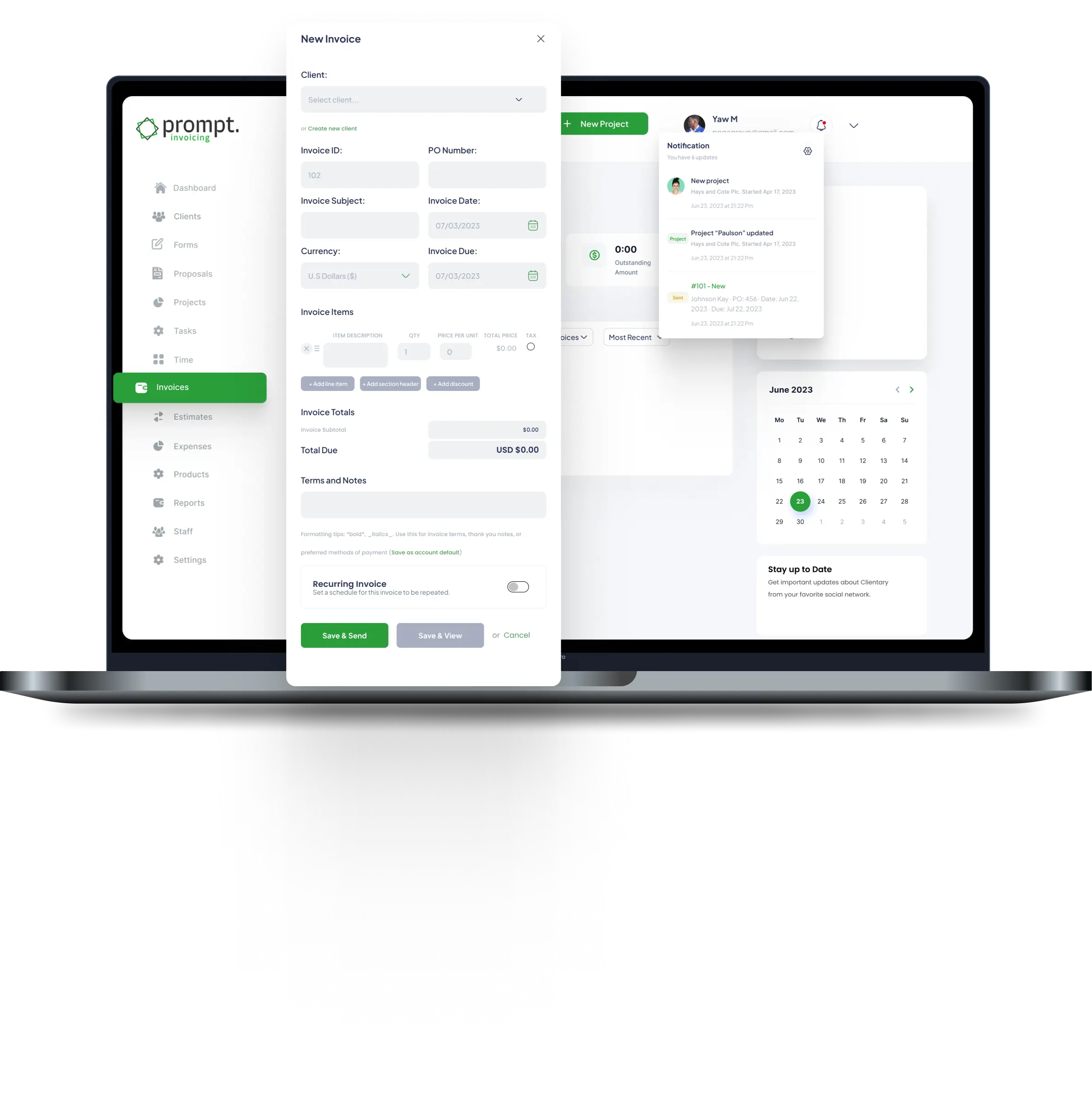
This is where having the right system can make a significant difference. Prompt Integrated is a cloud-based platform that allows you to manage invoices, projects, expenses, payments, and payroll in one centralized space. Instead of juggling spreadsheets and disconnected tools, you can see a complete financial picture of your business at any time. With clear insights into income and expenses, it becomes much easier to determine how much you can safely pay yourself while staying profitable.
A Simple Framework to Follow
Ultimately, the process of paying yourself as a business owner follows a straightforward structure. You separate your finances, establish a consistent schedule, choose a sustainable amount, transfer funds properly, track everything carefully, and set aside money for taxes. When done consistently, this approach keeps your finances clean and your business stable without unnecessary complexity.
Don’t Be Afraid to Pay Yourself
Most importantly, do not be afraid to pay yourself. Many entrepreneurs hesitate because they feel the business should always come first. But paying yourself is not selfish; it is responsible leadership. A business that cannot support its owner is not truly sustainable. When you pay yourself consistently and manage your finances strategically, you build a foundation for long-term growth and personal financial security.
With clarity, structure, and the support of a system like Prompt Integrated, paying yourself shifts from being a confusing afterthought to becoming a strategic part of running a healthy, successful business.







Leave A Comment