

August 17, 2026
article by the prompt team
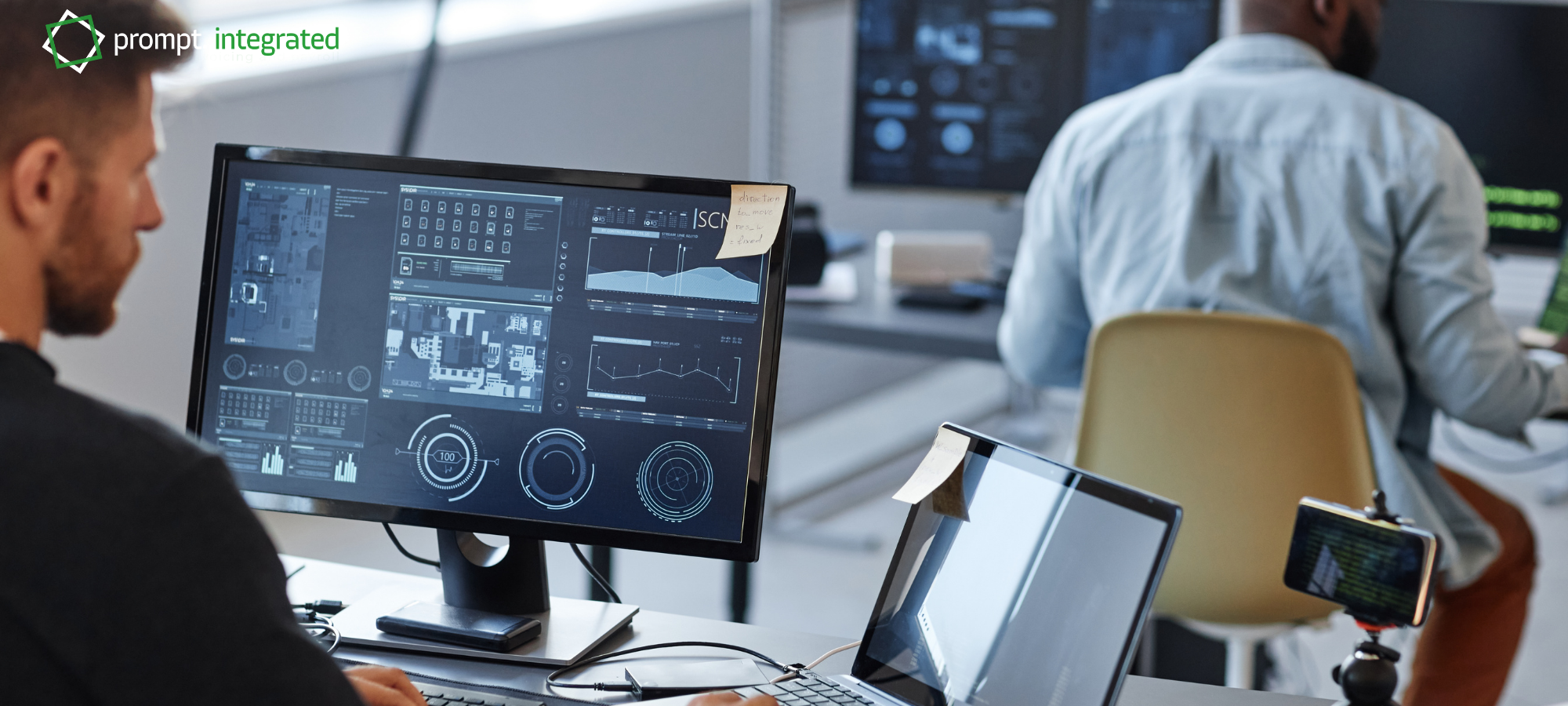
As Ghana’s digital economy grows rapidly — with more businesses adopting mobile money, cloud platforms, online banking, and digital communication tools — the exposure to cybercrime grows alongside it.
Cyber-attacks are unauthorised attempts to access, corrupt, or steal a company’s sensitive data. And while it is tempting to assume that hackers only target large corporations, the reality is very different. Small businesses are frequently the easiest targets precisely because they are less likely to have robust cybersecurity measures in place.
In Ghana, where digital financial transactions through platforms like MTN MoMo and Vodafone Cash are deeply embedded in daily business operations, a successful cyber-attack can compromise customer data, disrupt payments, damage your reputation, and cost your business significantly — in lost revenue, in recovery costs, and in the trust of the clients you have worked hard to build relationships with.
The Cyber Security Authority of Ghana — the government body responsible for regulating and promoting cybersecurity across the country — has consistently highlighted the growing threat of cybercrime to Ghanaian businesses of all sizes. Their guidance is clear: the time to act is before an incident happens, not after.
This guide covers the most common cybersecurity threats facing Ghanaian small businesses and the practical steps you can take right now to protect yours.
Here’s what we’ll cover:
- The biggest cybersecurity threats for businesses
- How a cyberattack can impact your business
- Which links are safe to open
- Can you get a virus just from opening an email?
- Is public Wi-Fi safe to use?
- Practical tips for staying safe online
- What to do if you experience a cyberattack
- Final thoughts
The biggest cybersecurity threats for businesses
Understanding what you are up against is the first step toward protecting yourself. Here are the most common cybersecurity threats that Ghanaian small businesses face:
Phishing scams. Cybercriminals impersonate a trusted source — a bank, a supplier, a government agency, or even a colleague — in order to trick you into revealing sensitive information like passwords, account numbers, or customer data. In Ghana, phishing attempts increasingly arrive via WhatsApp, email, and SMS, often impersonating financial institutions or mobile money platforms.
Spyware. Software that secretly monitors your device and collects information about your business — including login credentials, financial data, and customer records — without your knowledge, then transmits that data to a third party.
Malware. Malicious software that infects a device with viruses, worms, or trojan horses — often damaging the device, corrupting files, or rendering systems temporarily or permanently unusable.
Ransomware. One of the most damaging and increasingly common forms of cyberattack. Ransomware holds your business’s data or systems hostage, threatening to delete or expose it unless a ransom is paid. For a small Ghanaian business whose entire customer and financial records are stored on a single computer, a ransomware attack can be catastrophic.
Fraudulent emails. By far the most common entry point for cybercriminals. A convincing fake email — appearing to come from a supplier, a client, or your bank — can deceive even careful employees into clicking a dangerous link or providing sensitive information.
How a cyberattack can impact your business
The consequences of a successful cyberattack extend well beyond the immediate technical disruption.
Beyond the loss of data, files, or entire systems, a cyberattack consumes your business’s resources as staff are forced to focus on containing the damage and rebuilding security rather than serving customers or generating revenue. Employees may be unable to carry out their normal work for days or even weeks.
The reputational damage can be equally serious. Customers who learn that their personal or financial information has been compromised lose trust — and in Ghana’s relationship-driven business environment, that trust is extremely difficult to rebuild once it is lost.
If a cyberattack results in a data breach — particularly one involving customer financial information — your business may face regulatory consequences under Ghana’s Data Protection Act, 2012 (Act 843), which requires businesses to take appropriate measures to protect personal data and report certain types of breaches.
Fortunately, the most damaging types of cyberattacks can be significantly reduced through proper employee training and basic security practices. Most successful attacks exploit human error — not technical weaknesses.
Which links are safe to open?
Even when a link appears to come from someone you know, it is worth pausing before clicking.
Malicious links are one of the most common ways cybercriminals gain access to business systems. There are several warning signs to look out for:
Shortened links — where the full destination is hidden — are frequently used by phishers to conceal where a link actually leads. Links containing unusual strings of characters, such as symbols or random letter combinations, should be treated with suspicion. Any link arriving in an unsolicited email or WhatsApp message deserves extra scrutiny, regardless of who appears to have sent it.
Free online tools such as Norton SafeWeb or URLVoid allow you to check whether a link is safe before clicking on it. Building this habit into your team’s daily practice costs nothing and can prevent significant damage.
Can you get a virus just from opening an email?
In most cases, simply opening an email is relatively low-risk. The real danger lies in email attachments and links — which can activate viruses, trojan horses, or worms the moment they are clicked.
Never open an attachment from an unknown sender. If you receive an attachment or link from a known contact that you were not expecting, contact that person directly — by phone or a separate message — to confirm they actually sent it before opening anything. Cybercriminals regularly compromise legitimate email accounts and use them to send infected messages to the account holder’s entire contact list.
For Ghanaian small businesses that conduct much of their communication through WhatsApp and email, this vigilance is particularly important. A compromised account belonging to a trusted supplier or client can look completely authentic — right up to the moment it causes serious damage.
Is public Wi-Fi safe to use?
With more Ghanaian business owners and their teams working from coffee shops, shared workspaces, and other public locations across Accra, Kumasi, and beyond, the question of public Wi-Fi safety is increasingly relevant.
The honest answer is: public Wi-Fi should never be trusted for sensitive business activity.
Unsecured public networks are prime targets for man-in-the-middle attacks — where an unauthorised individual intercepts data travelling between your device and a website. This can expose login credentials, financial information, and confidential business data without you ever knowing it happened.
When working in public places, your team should use a VPN (virtual private network) to encrypt their connection, or use their mobile data connection rather than public Wi-Fi for any work involving sensitive information.
Practical tips for staying safe online
Cybersecurity does not have to be complicated or expensive. A handful of consistently applied practices will protect most small Ghanaian businesses from the vast majority of common threats.
Keep your cloud operations secure
Cloud-based platforms — like Prompt Integrated — allow your team to access financial data, invoices, payroll records, and project information from anywhere, which is enormously valuable for a mobile, growing business. But cloud security requires active management.
Ensure that every team member uses a strong, unique password for cloud platforms. Enable two-factor authentication wherever it is available. Restrict access so that team members can only see the data relevant to their role. And choose cloud platforms that prioritise data encryption and security — because where your business data lives matters as much as how you use it.
Use strong passwords and two-factor authentication
Weak passwords remain one of the most common and most easily preventable entry points for cybercriminals. A strong password combines letters, numbers, and symbols in a way that is not easily guessable — and it is never reused across multiple accounts.
Two-factor authentication (2FA) adds a second layer of security by requiring a code sent to a trusted device — usually a mobile phone — in addition to a password. Even if a password is compromised, 2FA prevents unauthorised access. For any platform that holds sensitive business or customer data, enabling 2FA is a non-negotiable basic practice.
Install and maintain antivirus software
Every device used for business purposes — whether a laptop, a desktop, or a smartphone — should have reputable antivirus software installed and kept up to date. Antivirus software protects against malware, spyware, ransomware, and other common threats, and provides an early warning system when suspicious activity is detected.
For businesses with multiple devices, a business-grade security solution that protects the entire network is worth the investment. Always pay for antivirus software from a reputable provider — free downloads from unfamiliar sources can themselves be a vehicle for malware.
Be cautious with pop-ups
Pop-ups are at best an annoyance and at worst a genuine security threat. Some pop-ups — known as scareware — claim to have detected a virus on your computer and request payment to fix it. Accepting can result in actual malware being installed.
Set your browser to block pop-ups by default, and always close any that do appear using keyboard controls rather than clicking anything on the pop-up itself.
Back up and encrypt your data
All critical business data should be backed up regularly — ideally in both a cloud-based location and on a physical external drive stored securely offline. If your systems are ever compromised by malware or ransomware, recent backups are what allow you to recover without paying a ransom or losing everything permanently.
Data encryption adds another layer of protection by making your information unreadable to anyone who does not have the appropriate access. For Ghanaian businesses storing customer personal data — names, contact details, payment information — encryption is not just good practice. Under Ghana’s Data Protection Act, 2012, it is a legal obligation.
What to do if you experience a cyberattack
If you suspect a data breach or cyberattack, speed is critical. The longer a breach goes unaddressed, the more damage it can cause.
Contact your IT support immediately at the first sign of an incident. They can assess what has happened, identify how the attacker gained access, and begin containing the damage.
If the breach involved customer personal data, you may have reporting obligations under Ghana’s Data Protection Act. The Data Protection Commission of Ghana is the regulatory body responsible for overseeing compliance — and depending on the nature and severity of the breach, you may be required to notify both the Commission and the affected individuals.
Even if you determine that formal reporting is not required, document everything — what happened, when, how it was discovered, and what steps were taken in response. This documentation protects your business and demonstrates that you acted responsibly.
After the immediate incident has been resolved, review your cybersecurity practices thoroughly. In most cases, an attack reveals a gap in either your technical security or your team’s awareness — and addressing both is essential to preventing a recurrence.
Final thoughts
Cybersecurity is not a concern reserved for large corporations or technology companies. For any Ghanaian small business that handles customer data, processes digital payments, or stores financial records online — which is to say, almost every business operating in Ghana’s modern economy — it is a real and present responsibility.
The good news is that the most effective defences are not complicated or expensive. Strong passwords. Two-factor authentication. Regular backups. Antivirus software. Cautious email habits. A cloud-based platform with built-in security. These practices, consistently applied, protect the vast majority of small businesses from the vast majority of common threats.
The Cyber Security Authority of Ghana provides free guidance and resources for businesses looking to strengthen their cybersecurity posture. Taking the time to engage with those resources is a practical investment in the security of everything you have built.
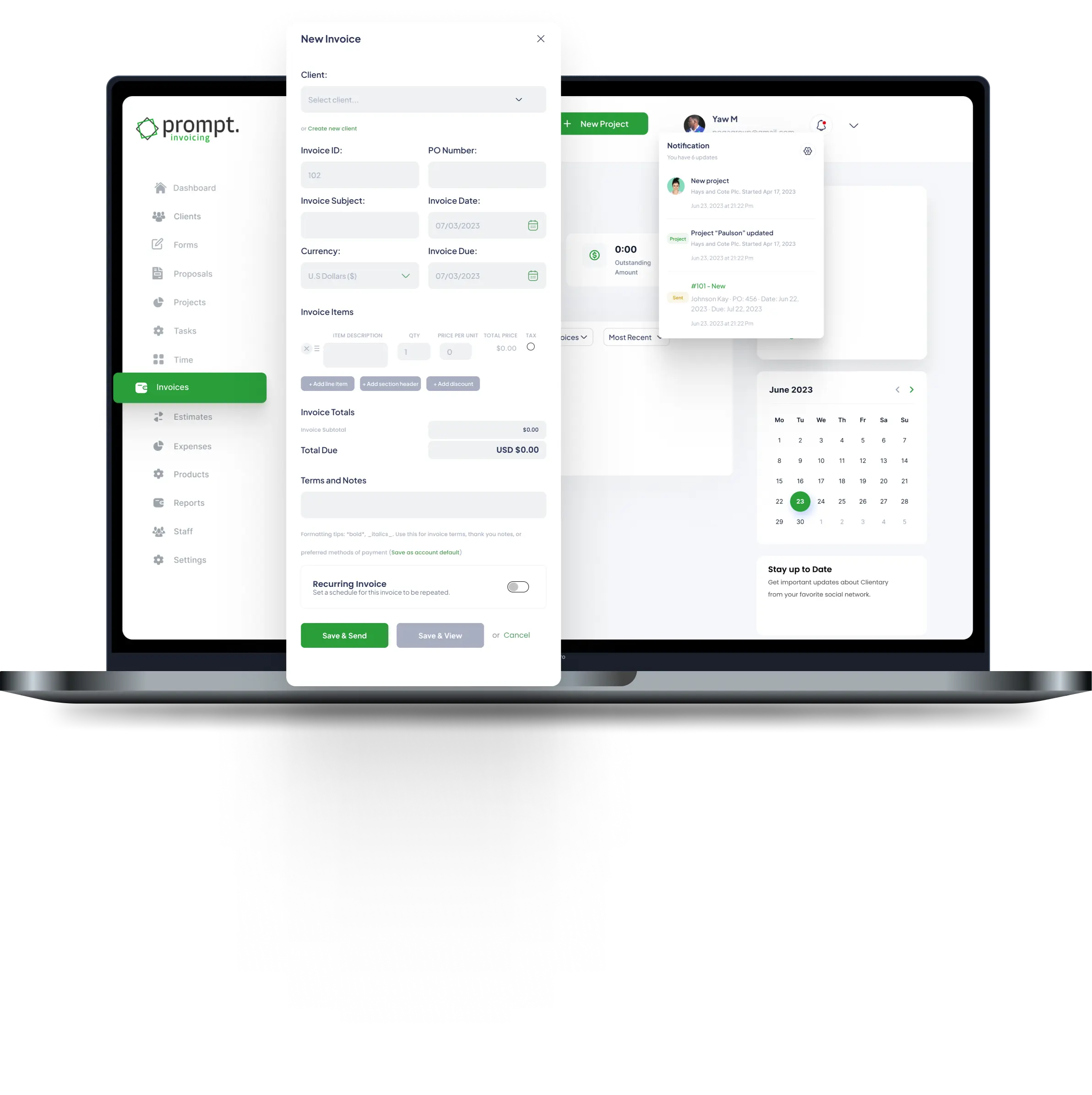
Prompt Integrated supports Ghanaian small businesses in operating securely and efficiently — with cloud-based invoicing, expense management, payroll, and project management tools that keep your financial data organised, accessible, and protected. Get started with Prompt Integrated today.






Leave A Comment