

November 15, 2026
article by the prompt team
As a small or medium business owner, or perhaps an accountant navigating the complex terrain of fiscal policies, you’re acutely aware of how Budget announcements can ripple through the foundations of your operations.
The Ghana Budget Speech, delivered in November 2025, is no exception.
With the country’s economy facing its own set of challenges and opportunities, the 2026 Budget is particularly significant for businesses striving to adapt and succeed in an ever-evolving marketplace.
This article aims to distill the essence of the 2026 Budget Speech, focusing on the outcomes most pertinent to you, the business community.
From wage agreements and support for businesses to tax measures and new government initiatives, understanding these developments is crucial. More importantly, it’s about recognising the actions you might need to take in response to these changes.
So, whether you’re steering a small enterprise through the choppy waters of the Ghanaian economy or managing the accounts of a mid-sized firm looking to expand, the insights provided here are tailored for you.
This round-up will not only highlight the key outcomes relevant to your business but also guide you through the steps to align with or benefit from these fiscal policies.
Are you ready?
Then let’s embark on this journey through the 2026 Budget Speech, with a lens focused on empowering your business in these transformative times.
By the end of this article, you’ll have a clearer understanding of what the Budget means for your business and how you can navigate the year ahead with confidence and strategic foresight.
Here’s what we’ll cover:
- Economic outlook
- Economic challenges and opportunities
- Key Budget outcomes for businesses
- Additional Budget announcements
- What your business needs to do now
- Final thoughts
Economic outlook
Finance Minister Dr Cassiel Ato Forson presented the 2026 Budget under the theme “Resetting for Growth, Jobs, and Economic Transformation”. The speech describes the Budget as a shift from recovery to transformation.
How the economy performed in 2025, according to the government:
- Real GDP grew 6.3% in the first half of 2025, up from 5.1% a year earlier, with non-oil GDP growing 7.8%.
- Inflation fell from 23.8% in December 2024 to 8% by October 2025, returning to single digits.
- The cedi moved from GH¢16.35 to the dollar in November 2024 to GH¢10.92 on 10 November 2025, which the speech describes as a 35% real appreciation.
- Public debt fell from GH¢726.7 billion (61.8% of GDP) in 2024 to GH¢630.2 billion (45% of GDP) by October 2025.
- The 91-day Treasury bill rate fell to 10.7%, which the speech calls the lowest in 14 years.
2026 targets:
- Real GDP growth of at least 4.8%, and non-oil growth of at least 4.9%.
- End-year inflation of 8.0%, with the Bank of Ghana holding inflation within a band of 8±2%.
- A primary surplus of 1.5% of GDP, and reserves covering at least three months of imports.
These are targets, not guarantees. They matter because falling inflation and a steadier cedi directly affect your input costs, pricing, and borrowing costs.
Economic challenges and opportunities
The challenges. The speech is open about several pressure points:
- Oil production has fallen from 71.4 million barrels in 2019 to an estimated 36 million barrels in 2025.
- The 2026 plan still relies on borrowing, with an overall cash deficit projected at 4.0% of GDP (GH¢64.2 billion).
- Leakages at the ports remain a concern: in 2024, imports valued at GH¢204 billion (CIF) produced only GH¢85 billion in taxable value, which the speech links to misclassification and under-invoicing.
The opportunities. The government’s priorities for 2026 are consolidating macroeconomic stability, accelerating economic transformation and job creation, and strengthening security and social sectors. For businesses, the openings are in:
- tax relief and simpler VAT rules,
- the 24-Hour Economy programme and the Big Push infrastructure drive,
- agriculture and agro-processing, and
- new finance and skills programmes for small businesses.
Key Budget outcomes for businesses
Tax adjustments
The headline measure for most businesses is the VAT overhaul. The speech says the reforms aim to make the VAT system fairer, simpler, and more efficient, and to address the cascading effects of the current system. The package:
- Abolishes the COVID-19 Health Recovery Levy. The speech says this puts GH¢3.7 billion into the pockets of individuals and businesses in 2026 alone.
- Allows input tax deductions on the GETFund and NHIL levies. The government says this reduces the cost of doing business by 5%.
- Reduces the effective VAT rate from 21.9% to 20%.
- Raises the VAT registration threshold from GH¢200,000 to GH¢750,000. The speech notes the old threshold had fallen in real terms to roughly GH¢48,000 in today’s values, pulling small and micro businesses into VAT.
- Abolishes VAT on mineral reconnaissance and prospecting.
- Extends VAT zero-rating on locally manufactured textiles to 2028.
Altogether, the government expects the VAT reforms to give back nearly GH¢6 billion to businesses and households. Earlier media reports put this at GH¢5.7 billion, so quote the speech’s “nearly GH¢6 billion” if you cite it.
Digital tools and compliance. The speech also proposes digital collection of VAT on cross-border transactions on platforms owned by non-resident taxpayers, the introduction of Fiscal Electronic Devices (FEDs) to monitor taxable transactions, and a VAT reward scheme that encourages the public to collect VAT receipts. The Ghana Revenue Authority will run a public education campaign on the reforms.
Imports and ports. If you import, pay close attention:
- The government plans AI-driven pre-arrival inspections for all cross-border shipments to detect under-valuation and flag high-risk goods.
- The Bank of Ghana will match every forex transfer with verified import data, and an inter-agency committee will audit import-related transfers.
Expect closer scrutiny of import declarations and valuations. Accurate invoices and supporting documents are your best protection.
More reform coming. Ahead of 2027, the government will review the Income Tax Act, 2015 (Act 896), the Customs Act, 2015 (Act 891), and the Excise Duty Act, 2014 (Act 878), with a draft bill to Parliament as part of the 2027 Budget. The speech says the focus is on expanding the tax net rather than overburdening existing taxpayers.
Wages and employment costs
The Minister thanked Organised Labour and the Employers’ Associations for agreeing the National Minimum Wage and Base Pay for 2026 ahead of the Budget. The speech does not state the figures, so confirm the current minimum wage and base pay with the Fair Wages and Salaries Commission and update your payroll accordingly.
Support for businesses and entrepreneurs
The Budget includes several funding lines relevant to small businesses:
- GH¢401 million for the Women’s Development Bank to crowd in finance for women-owned MSMEs.
- GH¢170 million for the National Apprenticeship Programme.
- GH¢100 million for the National Coders Programme and GH¢160 million for the “Adwumawura” enterprise support programme.
- GH¢110 million for the 24-Hour Economy programme, to be leveraged with GIIF, Development Bank Ghana, and private capital.
- A GH¢6.9 billion oil palm finance window under the National Policy on Integrated Oil Palm Development (2026 to 2032).
Additional Budget announcements
The speech goes well beyond tax. These are the announcements most likely to touch your operations and strategy.
Infrastructure developments
- The Big Push Infrastructure Programme, valued at US$10 billion, receives GH¢30 billion in 2026 for strategic roads and bridges.
- The Accra-Kumasi Expressway is a 198.7 km, six-lane project expected to halve travel time between the two cities and cut transport costs by nearly 40%.
- A three-year programme will build 1,000 km of agricultural enclave roads, with GH¢828 million allocated, to cut transport costs and post-harvest losses.
- The government says most Big Push projects are expected to be completed by mid-2027.
If your business depends on logistics, these projects could lower transport costs over time. They are expectations, not delivered results.
Energy
Reliable power remains a core business cost. The government says it has renegotiated all Power Purchase Agreements, saving over US$250 million, and is no longer accruing new arrears in the energy sector. Plans include a 1,200-megawatt state-owned thermal power plant, with construction starting in 2026, and a rural electricity programme (GH¢2 billion for Phase I) starting in the Volta, Oti, Savannah, and Central regions. The aim is to make power more reliable and affordable, but keep your backup plans in place until you see the improvement.
Education and skills
The Ministry of Education receives GH¢33.3 billion, with a further GH¢9.9 billion for GETFund. There are plans to end the double-track system in secondary schools. For employers, the practical angle is the apprenticeship and coding programmes above, which can help you build a pipeline of skilled workers. Consider offering internships or placements.
Agriculture and manufacturing
- All schools, from basic to secondary, have been directed to buy only Ghana-produced rice, maize, chicken, and eggs. That is a clear opening for local food producers and suppliers.
- Exports of non-ferrous scrap metals and raw rubber will be restricted under the Feed the Industry Programme. If you trade in these materials, this directly affects you.
- Three new garment factories and seven agro-processing plants are planned, with the factories expected to create about 20,000 direct jobs.
Public spending, procurement, and doing business with government
If you supply government, note these changes:
- An audit of arrears found that of GH¢68.8 billion submitted, GH¢47.8 billion was validated, GH¢8.6 billion remains under review for inadequate documentation, and about GH¢10.4 billion was rejected, citing duplicate invoices, inflated invoices, and no work done.
- A new Value for Money Office will certify major projects before approval and monitor delivery.
- Procurement thresholds are being updated under the Public Procurement Act.
- The commitment authorisation process is being reinforced, so no new projects start without budgetary approval or funding.
The lesson for contractors: documentation matters. Claims with missing contracts or supporting records were the ones held back.
What your business needs to do now
As a business owner or accountant, now is the time to take a proactive stance.
Here’s what you should do now:
- Review your business model and financial planning in the context of the 2026 Budget Speech.
- Assess how the VAT changes and other tax measures affect your pricing, margins, and cash flow. Check whether the lower VAT rate, the input tax deductions on the GETFund and NHIL levies, and the new GH¢750,000 registration threshold apply to you.
- Confirm current VAT rules and commencement dates with the Ghana Revenue Authority or your accountant, and ask what Fiscal Electronic Device requirements will mean for your invoicing.
- Update payroll for the 2026 National Minimum Wage and Base Pay once you have confirmed the figures.
- If you import, tighten your documentation. Make sure valuations, classifications, and supporting documents are accurate, given the planned AI-driven inspections and forex-to-import matching.
- If you supply government, keep contracts, delivery records, and invoices complete and well organised.
- Explore the funding and skills programmes above, and look at how infrastructure, agriculture, and local-procurement measures could create new demand for your products or services.
- Engage with industry associations, financial advisers, and government agencies to gain deeper insights and practical guidance.
- Explore workshops, seminars, and webinars focused on budget analysis and business strategy adaptation after the Budget announcement.
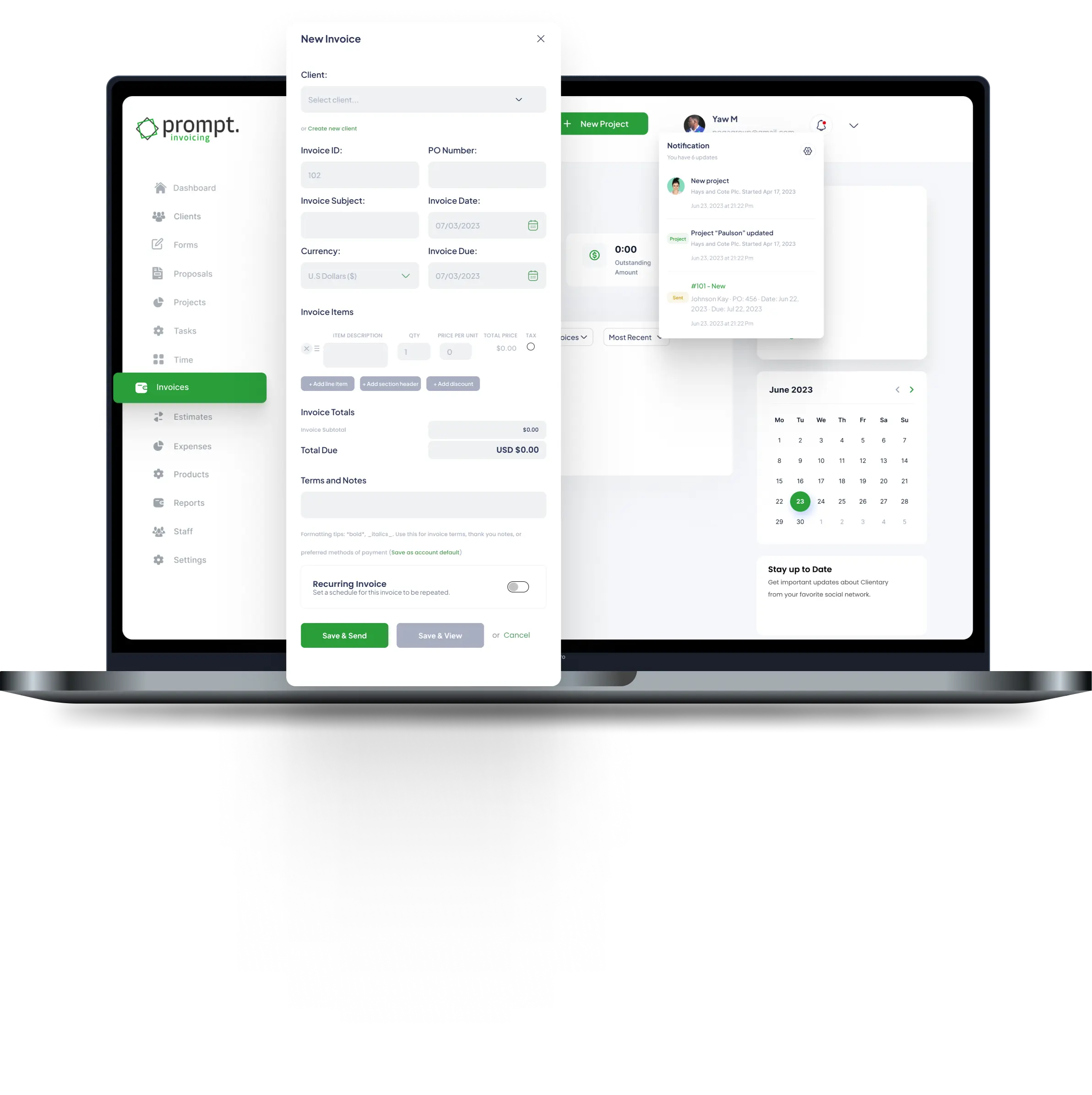
- Get your records in order. Accurate invoicing, expense, and payroll data will make it easier to apply the new rules and prepare for the planned review of the Income Tax, Customs, and Excise Duty Acts. Prompt Integrated keeps your invoicing, expenses, and payroll in one place.
Ultimately, the 2026 Budget Speech has set the stage for a transformative period for businesses in Ghana. By staying informed, flexible, and strategic, you can navigate the challenges ahead and seize the opportunities presented by the new fiscal landscape.
The journey ahead may be complex, but with the right approach and resources, your business can thrive in the evolving economic environment.
Final thoughts
The 2026 Budget Speech has laid out a series of measures and initiatives that present both challenges and opportunities for businesses in Ghana. Key takeaways include VAT reforms that lower costs and simplify compliance, new funding and skills programmes, heavy investment in roads and energy, and tighter scrutiny of imports and public-sector claims.
In light of these announcements, it’s worth adapting and staying flexible. Treat the changes as an opportunity to refine your business model, reduce costs, improve efficiency, and explore new markets or sectors. Many of the stated outcomes are still targets, so judge them by delivery over the year.
Prompt Integrated brings invoicing, expense management, payroll, and project management together in one platform built for Ghanaian businesses. Get started with Prompt Integrated today.








Leave A Comment