

November 09, 2026
article by the prompt team

There are upsides to a business entering survival mode. Necessity strips away unnecessary cost and drives innovation. It also renews an appreciation for your people and your customers. Businesses that avoid insolvency often come out the other side more resilient, even if they carry a few bruises.
That is where many small businesses in Ghana find themselves today. Exchange rate volatility, inflation, high import duties, and an ever-changing tax landscape have left many a little battered, but determined not just to survive, but to thrive.
Based on our observations, there is a general consensus that the key to accelerating growth is using the right technology: tools that improve customer service and payments, sharpen marketing, and drive sales through better customer relationship management (CRM).
Here’s what we’ll cover:
- Elevate your customer service
- Sharpen your marketing message
- Drive your sales through better CRM
- A practical example: a fashion retailer in Kumasi
- Final thoughts
1. Elevate your customer service
The rapid move to digital, accelerated by the pandemic, has changed what customers expect. Convenience with a personal touch is now the minimum for an acceptable experience and a prerequisite for repeat business. This is especially true for small businesses, which do not have a deep reservoir of brand equity to fall back on.
An engaged team is the foundation of great customer service, but technology can multiply their efforts.
Be accessible on multiple channels. Customers expect to reach you through your website, social media pages, newsletter, or WhatsApp. Make sure each channel delivers a consistent experience. Tailored FAQs and real-time chat, such as WhatsApp Business or Facebook Messenger, improve response times and build loyalty.
Keep a central record of customer interactions. Your team needs one place that records customer engagements, so queries and complaints do not fall through the cracks. These records also reveal repeat problems and bottlenecks in the customer journey.
Offer flexible payment options. Giving customers several ways to settle invoices removes friction and signals that you value their time. In Ghana, that means making it easy to pay by MTN MoMo, card, or bank transfer.
Use automation to save time. Many small businesses say they lack the time to implement technology. Start by mapping your processes to find the ones with manual, repetitive steps, such as answering common queries, generating invoices, running payroll, and capturing data. Automating them with chatbots and accounting or payroll software.
2. Sharpen your marketing message
We all like it when a business speaks to us as if it knows us. We want to be called by name, to have our preferences remembered, and to be recognised. Once customers have seen businesses do this well, they expect it from everyone.
The starting point is to segment your market by preferences. The 6th EY Future Consumer Index, a survey of 14,500 consumers across 20 countries in February 2021, found five broad groups of spending behaviour:
- Affordability first (32%)
- Health first (25%)
- Planet first (16%)
- Society first (15%)
- Experience first (12%)
If you knew which of your customers fell into which group, you could craft campaigns that resonate more deeply and are more likely to convert. Tools like SurveyMonkey or Typeform let you run your own customer surveys to support segmentation.
Consumers are also more aware of the impact of their buying decisions, so purpose-driven businesses whose actions match their values are becoming more appealing. To benefit, understand what your customers care about and be clear about what your business stands for. Once your message has a clear direction, use digital and social media platforms, such as WhatsApp, Instagram, and Facebook, to distribute it.
3. Drive your sales through better CRM
The more you know about your customers, the easier it is to strengthen the relationship, and the more sustainable and profitable your business becomes.
Technology plays a major role in collecting, storing, and analysing customer data, and CRM software is the foundation. For years, many small businesses avoided CRM because of the perceived cost. It is worth reassessing, because affordability has improved markedly.
The key benefits of a CRM system include:
- Prioritise your best customers. It supports the 80/20 rule, helping you see which customers matter most.
- Improve sales accountability by tracking progress and performance in real time.
- Save time on reporting, as most CRM tools automate sales reports.
- Share customer records across the team to keep the customer experience continuous and transparent.
- Track project and customer profitability to spot inefficiencies and improve cash flow forecasting.
- Stay compliant with data protection requirements, such as Ghana’s Data Protection Act, 2012 (Act 843), through built-in checks.
Final thoughts
Survival mode can sharpen a business. The companies that come out of it strongest are those that use technology to serve customers better, market with purpose, and understand their customers more deeply. Digital tools across customer service, marketing, and sales help in good times and bad, and they create stronger bonds between businesses and the people they serve.
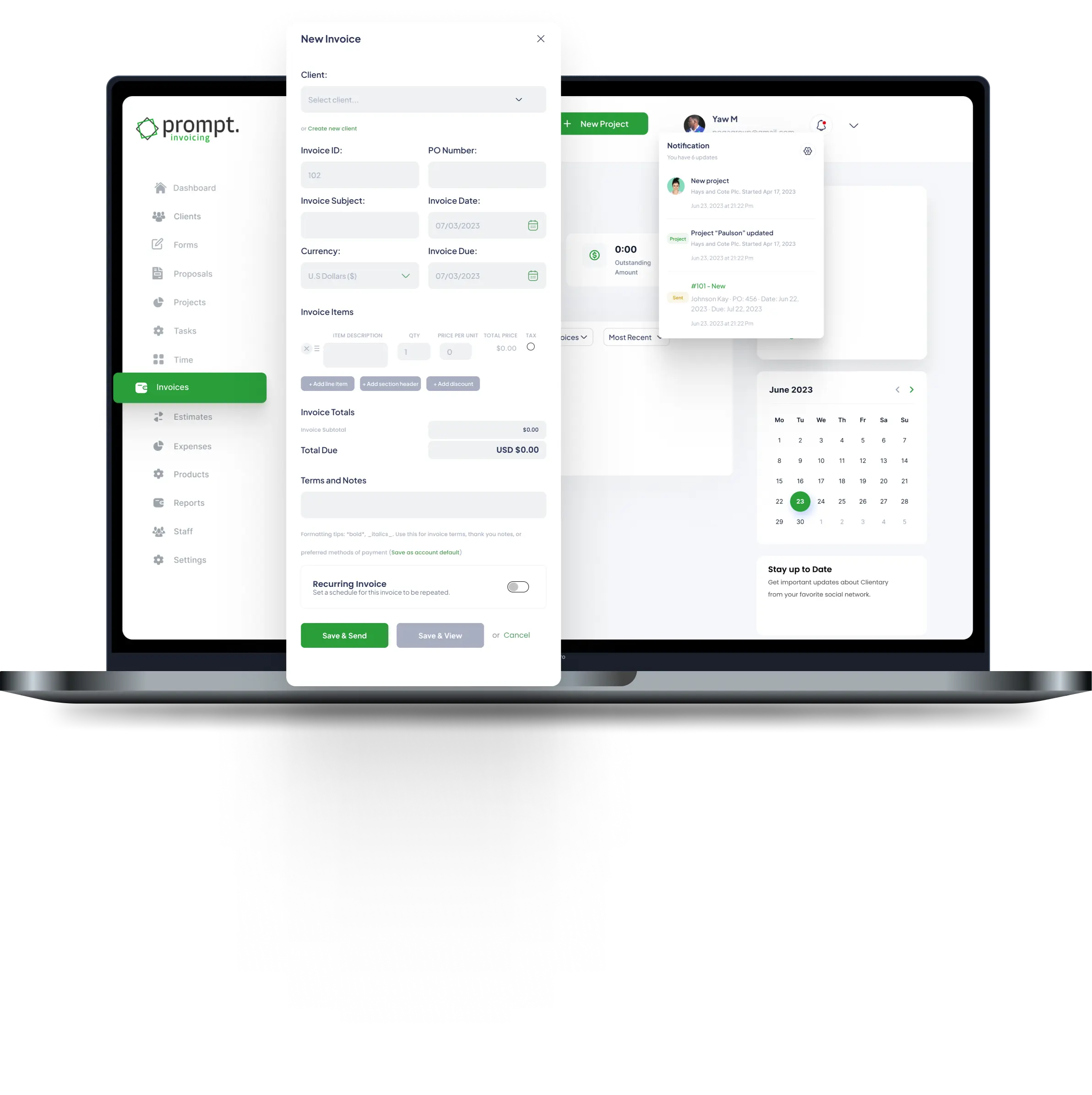
Prompt Integrated brings invoicing, expense management, payroll, and project management together in one platform built for Ghanaian businesses. Get started with Prompt Integrated today.










Leave A Comment