

September 24, 2026
article by the prompt team

The entrepreneurial life is exciting — but it also involves an extraordinary amount of hard work. Statistics consistently show that only a fraction of new businesses survive their first five years, and even fewer go on to grow significantly and create new jobs.
In Ghana’s fast-moving business environment, where ambition is everywhere but resources are often limited, knowing where to focus your energy in the early stages can make the difference between a business that thrives and one that quietly fades out before it ever reaches its potential.
Prompt Integrated’s product management team shares their five best tips for anyone starting a business in Ghana — drawn from the experience of building Prompt Integrated from the ground up and working closely with Ghanaian SMEs at every stage of their journey.
Here’s what we’ll cover:
- Trust yourself and your own instincts
- Be deliberate about the culture you are building from day one
- Do not spend money you do not have
- Be prepared to do everything — but hire people at the right time
- Have fun
- Final thoughts
1. Trust yourself and your own instincts
We have lived by this advice since the beginning of Prompt Integrated. We have received a great deal of good advice and plenty of friendly warnings along the way — from people who meant well and from people who knew a lot. But trusting your own intuition and believing in your own idea is never a bad approach.
You know better than anyone else the thinking behind your business, the purpose driving your decisions, and the vision you are working toward. Other people can offer perspective, and that perspective has value. But at the end of the day, you are the one who understands most deeply why you are doing this and what you are trying to build.
Trust yourself. Stay grounded in what defines you from the very beginning. And do not let well-meaning caution pull you away from something you genuinely believe in.
Ghana has produced some of its most successful entrepreneurs precisely because they held firm to ideas that others were not yet able to see clearly. Yours might be one of them.
2. Be deliberate about the culture you are building from day one
It is extremely important to be clear about what kind of culture, what standards of conduct, and what attitudes you want to build within your business — right from the start, and consistently throughout the growth phase.
Culture is not something that develops on its own and quietly corrects itself later. It is shaped actively, day by day, by the decisions you make, the behaviour you model, and the standards you hold yourself and your team to. What you allow in the early days tends to become the norm. What you build deliberately tends to last.
Get it right early and culture becomes one of your most powerful competitive advantages — attracting the right people, driving performance without excessive oversight, and creating the kind of workplace that people genuinely want to be part of. Leave it to chance and it can become one of your biggest and most expensive challenges to fix later.
In Ghana’s business environment, where relationships and trust carry significant commercial weight, a strong internal culture is also part of how you build a strong external reputation. Clients notice how your team behaves. Partners notice how you operate. And talented people notice whether your business is somewhere they want to build their careers.
Start with intention. Be clear about your values. Model the behaviour you want to see. And do not wait until your team is ten people before you think about culture — by then, you will already have one, whether you intended it or not.
3. Do not spend money you do not have
Some investment is of course necessary when starting a business. Equipment, technology, the first hire, the first marketing push — these require money, and spending it is part of building something real. But adopting a lean, disciplined approach to spending from the very beginning is never old-fashioned. It is one of the most important habits a Ghanaian entrepreneur can build.
Be sober about your expenses from the very start. Question every outgoing. Ask whether each cost is directly contributing to revenue or to a goal that actually matters right now. And carry that discipline into the growth phase — even as the business begins to become profitable and the temptation to spend more freely grows alongside the revenue.
The businesses that build lasting financial resilience in Ghana are those that treat every cedi as if it matters — because it does. The ones that struggle are often the ones that scaled their spending ahead of their revenue, and then found themselves trapped when conditions changed.
4. Be prepared to do everything — but hire people at the right time
As an entrepreneur in the early stages of your business in Ghana, you will not have a large team to delegate to. You will be the decision-maker, the salesperson, the administrator, the customer service representative, the social media manager, the delivery driver, and the operations manager — often all in the same day.
This is part of the reality of entrepreneurship. It is also, in many ways, part of what makes it rewarding. There is something genuinely satisfying about understanding every aspect of your business from the inside — and the knowledge you build by doing everything yourself in the early days is invaluable as the business grows and you begin to hand things over to others.
However, it is critically important to avoid the trap of thinking you can manage everything yourself indefinitely. Trying to do so for too long limits your growth, stretches your capacity beyond what is sustainable, and ultimately costs the business more than hiring someone earlier would have. The business cannot scale if it depends entirely on you for every decision and every task.
Hire new people in a timely manner — and ideally a little before it becomes absolutely necessary. A well-timed hire gives you the breathing room to onboard and train properly, rather than bringing someone in at the point of crisis when you have no time to do anything well.
For a deeper look at the full cost of hiring in Ghana — including SSNIT contributions, PAYE obligations, and the less obvious costs that many first-time employers miss — read our blog: What Does Hiring an Employee in Ghana Really Cost Your Small Business?
5. Have fun
Commitment, positivity, a good working environment, and a genuine sense of enjoyment in the work create the kind of energy that is essential for building something new — and for sustaining the effort required to build it well.
An early-stage business in Ghana often involves high work pressure, limited resources, long hours, and the constant challenge of solving problems that nobody has solved for you before. In that context, the culture you cultivate — the values you hold, the relationships you build within your team, the atmosphere you create, and the sense of shared purpose that ties everything together — becomes an invaluable asset that costs relatively little in time or money but delivers an enormous amount in terms of motivation, creativity, and resilience.
Take time to celebrate small wins, even when the big ones are still a long way off. Acknowledge the effort your team puts in, not just the results they produce. Build something that people are genuinely proud to be part of. And make sure that you yourself are finding meaning and satisfaction in the journey — not just waiting for some future point of success to feel good about what you have built.
The business you are creating should be something that reflects who you are and what you care about. Building it should, at least some of the time, be genuinely enjoyable. If it never is, that is worth paying attention to.
Good luck with your idea and your product. We are rooting for you.
Final thoughts
Starting a business in Ghana takes courage, discipline, and a willingness to keep going when things are hard. The five tips in this article — trusting your instincts, building culture deliberately, spending wisely, hiring at the right time, and maintaining genuine enjoyment in the work — are not complicated in theory. But they are the things that separate entrepreneurs who build something lasting from those who burn out before they get there.
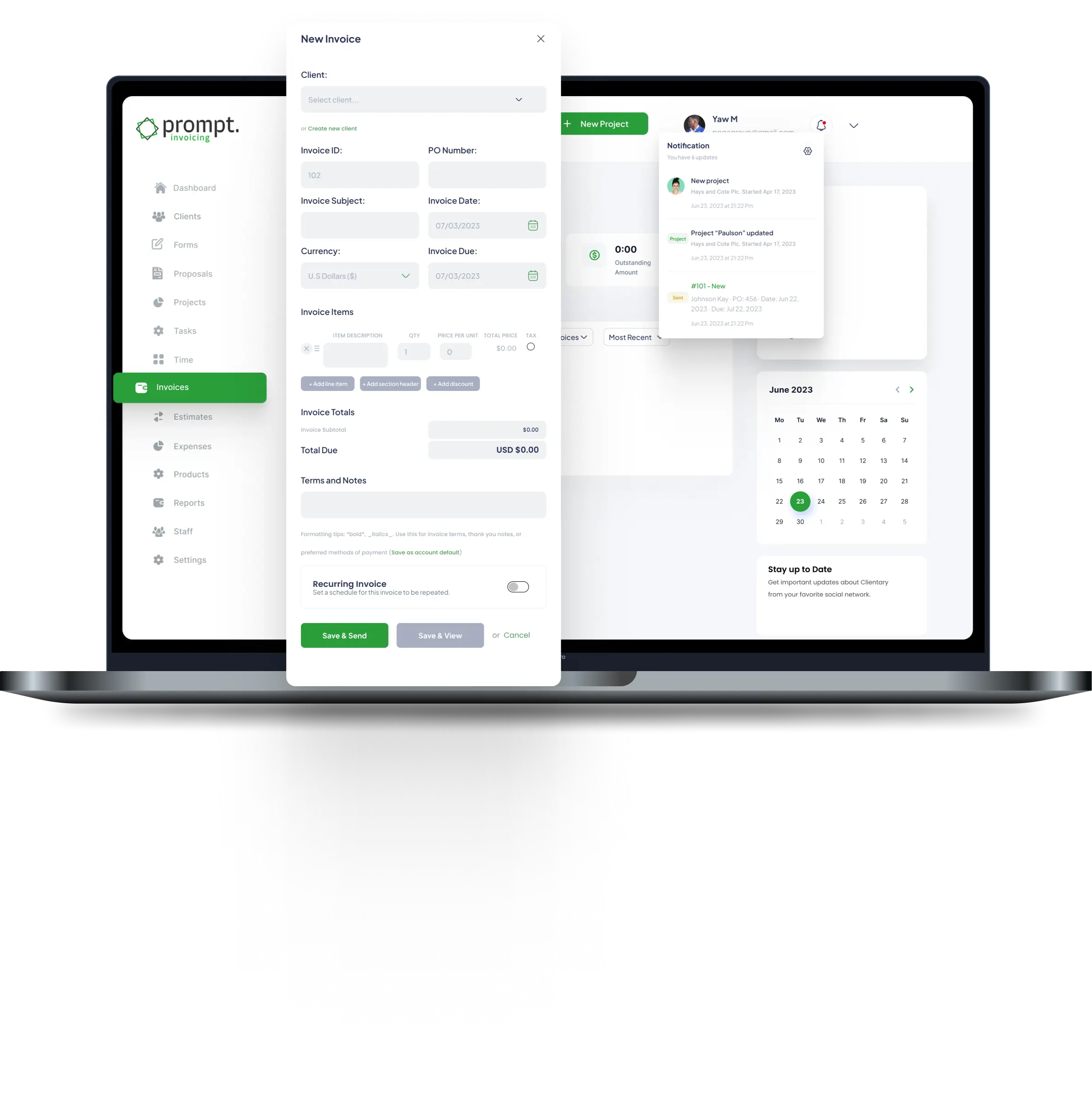
As you build your business, having the right operational tools in place from the beginning removes a significant amount of the friction that slows early-stage businesses down. Prompt Integrated is built to support Ghanaian small businesses at every stage of their journey — with invoicing, expense management, payroll, and project management all in one affordable, cloud-based platform that grows with your business as you do. Get started with Prompt Integrated today.









Leave A Comment