

April 02, 2026
article by the prompt team
Ghana is a country of remarkable contrasts. It is home to Lake Volta — the world’s largest artificial reservoir by surface area — a body of water that powers the nation through the Akosombo Dam, sustains fishing communities, and supports livelihoods across the region. Managing payroll in Ghana carries a similar kind of weight. Like Lake Volta, Ghana’s payroll ecosystem supports people’s livelihoods, powers business operations, and requires a careful, informed hand to navigate. Get it right, and it becomes the foundation of trust, compliance, and sustainable growth. Get it wrong, and the consequences — financial penalties, damaged employee relationships, and regulatory scrutiny — can be significant.
For businesses operating in Ghana, whether homegrown SMEs, growing enterprises, or multinational companies entering this dynamic market, payroll management is far more than a back-office administrative task. It is a legal obligation, a signal of how seriously you take your people, and a direct reflection of how well your business is run. Understanding how Ghana’s payroll system works — and having the right tools to manage it accurately — is not optional. It is essential.
Prompt Integrated is a cloud-based business management platform built for Ghanaian businesses that automates payroll calculations, manages statutory deductions, generates payslips, and maintains the records required for full compliance with Ghana’s tax and social security obligations — all from one centralised platform. This guide walks through everything businesses need to know about payroll in Ghana, including the compliance framework, employee entitlements, reporting requirements, and the practical challenges that make expert tools so valuable.

The Foundations of Payroll in Ghana
Every payroll process in Ghana begins before the first salary is ever paid — with the registration of employees with the relevant statutory authorities. Employers are required to collect critical information from each employee, including their Tax Identification Number (TIN) and Social Security number, before registering them with three key bodies.
The Ghana Revenue Authority (GRA) is the authority responsible for income tax collection. All employees must be registered for PAYE (Pay As You Earn), and employers are legally required to deduct and remit income tax on their behalf each month. The Social Security and National Insurance Trust (SSNIT) manages the Tier 1 mandatory social security pension, to which both employers and employees contribute. Finally, a licensed private fund manager — regulated by the National Pensions Regulatory Authority (NPRA) — manages the Tier 2 occupational pension and any voluntary Tier 3 contributions that employees choose to make.
This three-tier registration process ensures that every employee is properly accounted for within Ghana’s financial and social protection ecosystem. It also places a clear administrative responsibility on employers to manage the process correctly from day one — a responsibility that Prompt Integrated’s payroll module is designed to support.
Understanding Payroll Taxes in Ghana
Ghana’s payroll tax structure reflects a balanced approach to welfare contributions, sharing the burden of social protection between employers and employees.
Income tax under the PAYE system is progressive, meaning that employees with higher earnings pay a higher marginal rate. The GRA’s tax bands range from 0% on the lowest income tier to 35% for resident employees at the top of the scale. The first GHS 490 of monthly income is tax-free. PAYE must be calculated accurately against each employee’s total taxable income — which includes not just basic salary but also allowances and non-cash benefits such as housing, company vehicles, and meals.
SSNIT Tier 1 contributions require the employer to remit 13% of each employee’s basic salary to SSNIT each month. Of this, 5.5% is recovered from the employee’s pay and 7.5% is borne by the employer. An additional 5% of basic salary — the Tier 2 contribution — is paid entirely by the employer to the employee’s chosen private pension trustee.
PAYE must be remitted to the GRA Taxpayer Portal by the 15th of the following month. SSNIT contributions must be remitted by the 14th of the following month via the SSNIT Employer Self-Service Portal. Missing either deadline attracts penalties — SSNIT late payment carries a 3% monthly penalty on the outstanding amount, which compounds quickly if left unaddressed.
Prompt Integrated automates all of these calculations — applying the correct PAYE tax bands, computing SSNIT deductions on basic salary, and generating payslips that clearly itemise each deduction — removing the risk of manual calculation errors that lead to underpayment, overpayment, or regulatory penalties.
Payroll Timing and Payment Cycles
Ghana primarily operates on a monthly payroll cycle, with salaries expected to be disbursed by the last working day of each month. While some employers choose to operate bi-weekly pay cycles for operational convenience, maintaining consistency and ensuring timely payment is both a legal expectation and a fundamental obligation to employees under Ghana’s Labour Act (Act 651).
One important clarification for businesses entering Ghana from markets where it is common practice: unlike many other countries, Ghanaian labour law does not require employers to pay a 13th-month salary. This is not a statutory obligation in Ghana, and businesses should be careful not to inadvertently create contractual entitlements to bonuses or additional pay without legal advice.
Employee Leave and Benefits: What the Law Requires
Ghana’s labour laws reflect a genuine commitment to employee welfare, and understanding entitlements is essential for any business with staff in the country.
Every employee who has completed 12 months of continuous service is entitled to 15 working days of paid annual leave under the Labour Act. This leave entitlement is a legal minimum, not a discretionary benefit — and withholding it or failing to properly account for accrued leave in your payroll calculations can expose a business to legal liability.
Ghana’s maternity leave provisions are among the most progressive in West Africa. Female employees are entitled to 12 weeks of fully paid maternity leave, with an additional two weeks in the event of multiple births or pregnancy-related complications. Nursing mothers are additionally entitled to one hour of paid nursing breaks per day for up to 12 months after returning to work. These provisions reflect Ghana’s commitment to supporting working mothers and creating inclusive workplaces — and they carry specific payroll implications that must be factored into employment cost calculations.
Managing leave accruals, maternity entitlements, and benefit calculations alongside regular payroll processing is exactly the kind of complexity that Prompt Integrated’s payroll module is designed to handle — keeping employee records accurate and ensuring that all statutory obligations are met.
Record-Keeping and Reporting Requirements
Ghana’s payroll compliance framework places significant record-keeping obligations on employers. These are not administrative suggestions — they are legal requirements with real consequences for non-compliance.
Monthly PAYE returns must be filed with the GRA showing each employee’s earnings and the tax deducted. SSNIT contribution reports must be submitted monthly to SSNIT, detailing contributions for each employee. Annual returns of employees — summarising total earnings and tax deducted for the year — must be filed with the GRA by 30 April of the following year.
Perhaps most significantly, employers in Ghana are required to maintain detailed payroll records for a minimum of six years, and in some cases longer, to satisfy potential audit requirements from the GRA or SSNIT. These records must be complete, accurate, and retrievable — meaning that the habit of keeping thorough records is not just good practice but a legal obligation.
Prompt Integrated stores all payroll records securely in the cloud, maintaining a complete, timestamped history of every payroll run, every deduction, and every payslip generated. This makes compliance audits, GRA queries, and SSNIT verifications straightforward rather than stressful — because the records are always organised and always accessible.
The Real Challenges of Payroll Management in Ghana
Understanding the regulatory framework is one thing. Executing payroll correctly, month after month, while running a business is another. Ghana’s payroll system, though well-designed, presents a number of practical challenges that trip up even well-intentioned businesses.
The progressive PAYE tax system requires meticulous attention to ensure that calculations are applied at the correct rate for each employee’s income level. Any misstep — applying the wrong band, failing to include a taxable allowance, or missing an update to the GRA’s tax tables — can lead to underpayment, penalties, or employee dissatisfaction when deductions are higher or lower than expected.
The multi-tier pension system adds a further layer of complexity. Employers must manage contributions across SSNIT for Tier 1, a private pension trustee for Tier 2, and potentially multiple different fund managers if employees have made different choices for Tier 3 contributions. Each has its own reporting requirements, deadlines, and portals — a significant administrative burden for businesses without dedicated HR or payroll infrastructure.
Employment contract compliance adds yet another dimension. The Labour Act (Act 651) sets out specific requirements for the form and content of employment contracts in Ghana, including provisions around termination, notice periods, and redundancy payments. Businesses unfamiliar with these requirements risk creating contractual obligations that complicate payroll calculations — particularly around final pay settlements.
The Ghana Employers Association (GEA) represents a broad coalition of employers navigating these challenges and provides guidance and advocacy on employment law and payroll compliance in Ghana.
Why the Right Tools Make All the Difference
Given the complexity of Ghana’s payroll environment, the businesses that manage it most effectively are not necessarily those with the largest teams — they are the ones with the best systems. Manual payroll processing, whether through spreadsheets or disconnected software tools, is inherently prone to the kinds of errors and omissions that attract penalties and create compliance risk.
Prompt Integrated is built to remove that risk. By automating PAYE calculations against the current GRA tax tables, computing SSNIT and Tier 2 contributions on basic salary, generating accurate payslips, and maintaining complete payroll records in the cloud, it takes the complexity out of payroll compliance and gives business owners and HR managers the confidence to process payroll accurately every month.
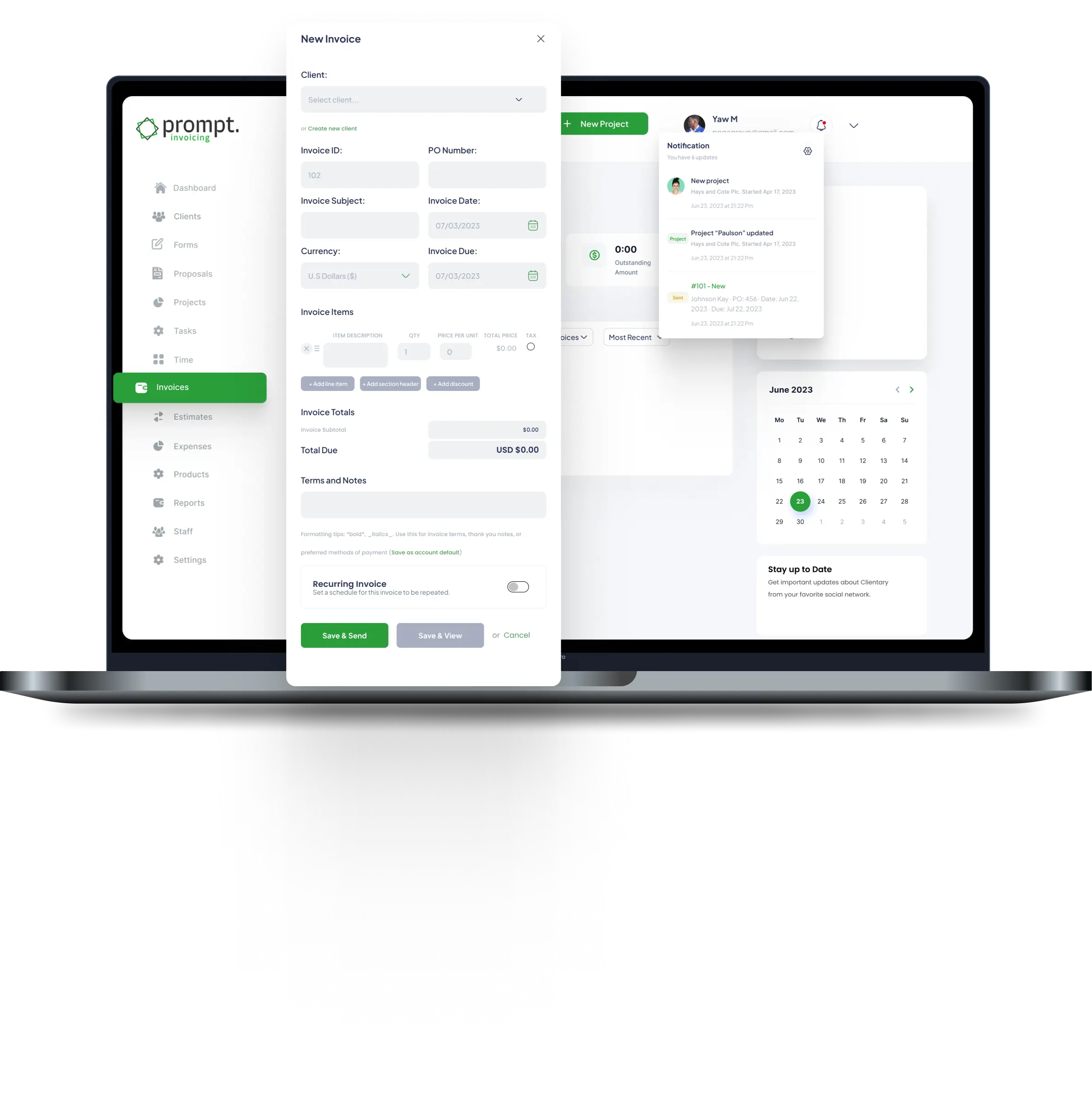
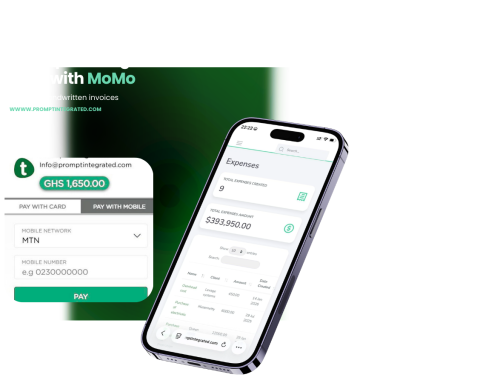
Prompt Integrated’s payroll module is also part of a broader integrated platform that connects payroll with invoicing, project management, expense tracking, and payments — giving Ghanaian businesses a complete financial management system rather than a collection of disconnected tools. And with planned integrations with Payswitch Ghana and Paystack extending to salary disbursements, Prompt Integrated will enable employers to pay their workers digitally and directly through the same platform used to calculate and record their payroll.
Final thoughts
Ghana’s payroll ecosystem is sophisticated, regulation-driven, and consequential. For businesses that manage it correctly — registering employees properly, calculating deductions accurately, filing on time, maintaining complete records, and honouring employee entitlements — payroll becomes the foundation of a trusted, compliant, and competitive workplace. For those that do not, the consequences range from financial penalties to legal liability to damaged employee relationships.
The good news is that the tools to get payroll right in Ghana are more accessible than ever. Prompt Integrated brings automation, accuracy, and compliance together in a single cloud-based platform — purpose-built for the realities of the Ghanaian business environment.
Payroll in Ghana does not have to be complicated. With the right platform behind you, it can be one of the most reliable, repeatable, and well-managed processes in your business.
Ready to take the complexity out of payroll in Ghana? Get started with Prompt Integrated today and process your first compliant payroll with confidence.
Disclaimer: This article is for informational purposes only. Payroll regulations are subject to change. Always refer to the Ghana Revenue Authority and SSNIT for the most current guidance, and consult a qualified HR or tax professional for advice specific to your business.









Leave A Comment