

February 25, 2026
article by the prompt team
Across many African markets, small businesses remain the backbone of economic activity, yet a significant portion still relies on handwritten invoices, paper receipts, and manual bookkeeping. While these methods have historically worked, they increasingly limit financial visibility, accuracy, and growth potential in today’s digital economy.
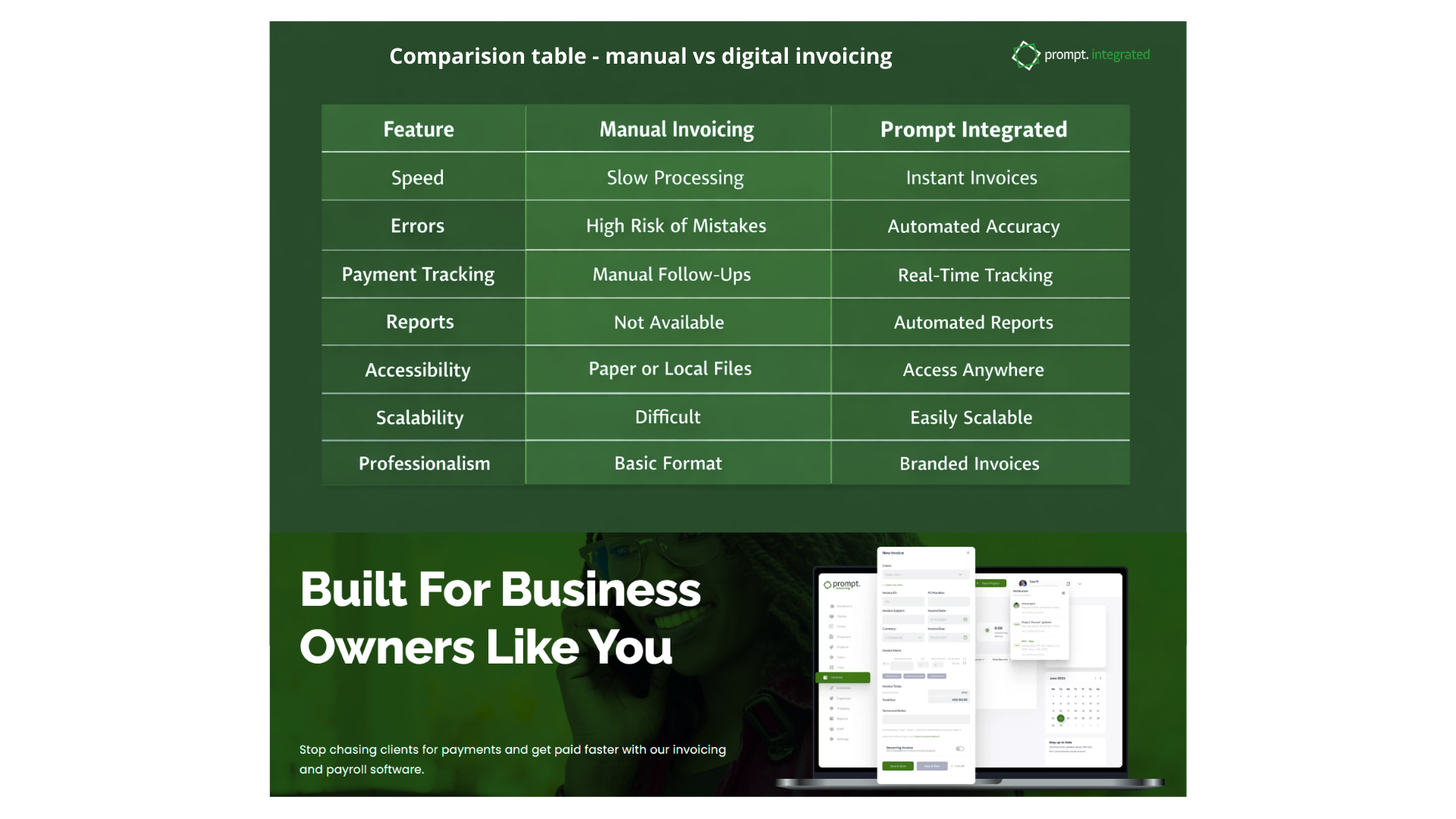
The Structural Problems With Manual Invoicing
Handwritten invoicing is not merely an outdated habit — it introduces notable operational risks, including:
1. Financial inaccuracies
Manual calculations increase the likelihood of arithmetic errors, misplaced decimals, or omitted charges. Even small mistakes compound over time, distorting profit visibility.
2. Poor record retention
Paper invoices are easily lost, damaged, or misfiled. Without reliable records, businesses struggle to track payments, verify transactions, or prepare financial reports.
3. Limited cash-flow visibility
When invoices are solely on paper, business owners are unable to quickly access information about total outstanding payments, customer payment history, and monthly revenue trends. This limited visibility renders forecasting and planning nearly unfeasible.
4. Slower payments
Clients often delay payments when invoices are handwritten, unclear, or difficult to track. Digital invoices, by contrast, create a documented trail that encourages faster settlement.
Real-World Example
Consider a local contractor overseeing several workers and suppliers. Relying on handwritten invoices, they might miscalculate totals after exhausting workdays, overlook billing for materials, or have difficulty confirming whether a client has already made a payment. However, upon transitioning to digital invoicing, this contractor can effortlessly create accurate invoices, monitor payment statuses, and access past records in mere seconds. The shift in operations is not just incremental — it’s truly transformative.
Why Digital Invoicing Is Becoming Essential
Digital tools have transitioned from being a luxury exclusive to large corporations to becoming essential for small businesses. They now serve as a foundational infrastructure that supports growth and efficiency. Key advantages include:
-
Accuracy: Automated calculations eliminate human math errors.
-
Professionalism: Structured invoices increase credibility with clients and partners.
-
Speed: Invoices can be created and sent in seconds.
-
Transparency: Financial data is organized and searchable.
-
Scalability: Systems grow alongside the business without added administrative burden.
In markets where the adoption of mobile payments and digital finance is rapidly increasing, businesses that continue to rely on paper-based methods risk lagging behind competitors who operate more swiftly and efficiently..
The Strategic Advantage of Switching Early
Businesses that embrace digitization of financial processes early on experience compounding advantages, including enhanced financial insights, increased client trust, better compliance readiness, and easier access to funding due to verifiable records. On the other hand, companies that postpone digitization frequently encounter expensive transitions later, particularly when they are scaling or pursuing partnerships.
Digital Invoicing as a Practical Solution
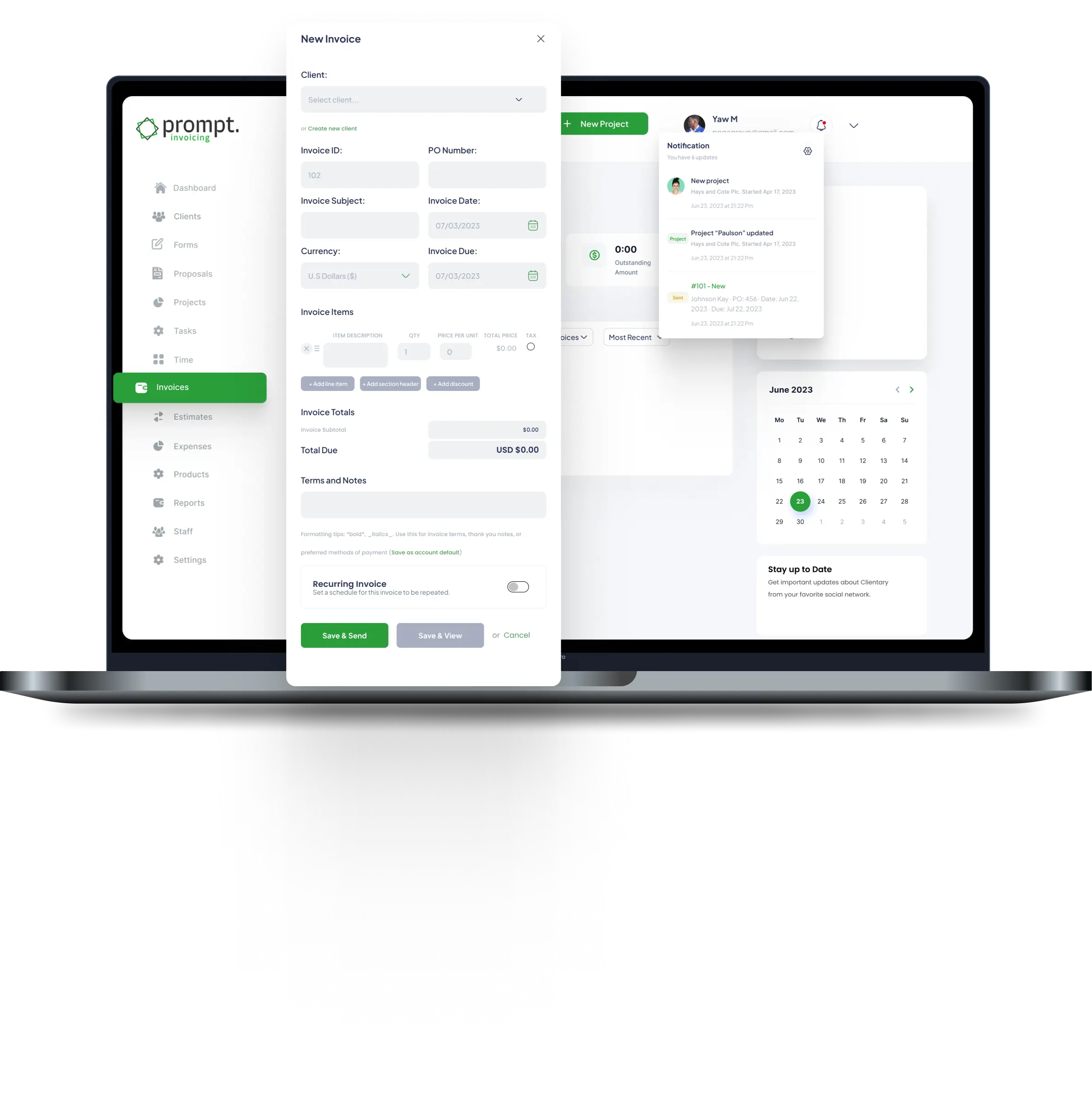
Prompt Integrated tackles these challenges by substituting handwritten invoices with structured, user-friendly digital systems tailored for actual business environments. Rather than requiring businesses to adjust to complicated software, the platform streamlines daily tasks such as generating invoices instantly, securely storing records, automatically tracking payments, and monitoring financial performance in real time. The outcome is not just convenience; it brings operational clarity as well.
Final thoughts
Manual invoicing not only proves to be inefficient, but it also hinders growth, transparency, and financial oversight. For small businesses striving to thrive in an ever-evolving digital landscape, implementing organized invoicing systems stands out as one of the most impactful operational enhancements. By modernizing their financial workflows now, businesses can secure greater stability, make informed decisions, and foster sustainable growth for the future.









Leave A Comment